The journey from Kathmandu to Pokhara is a staple for nearly anyone visiting Nepal. You start in the bustling, culturally rich capital and travel to the serene, lakeside gateway of the Annapurna Himalayas. But how exactly do you cross the 200 kilometers (about 125 miles) of winding mountain roads that separate these two iconic cities?
Choosing the right mode of transportation can make or break your travel experience. Do you want to save money, prioritize comfort, or soak in the best views? This guide will walk you through every available option to help you make the best decision for your itinerary.
Read on to discover the pros and cons of flights, tourist buses, private vehicles, and motorcycles, along with practical tips to make your journey smooth and memorable.
The Journey at a Glance
The route between Kathmandu and Pokhara primarily follows the Prithvi Highway. This two-lane road winds through steep river valleys, terraced hillsides, and small rural towns. While the distance is relatively short on a map, the mountainous terrain means travel times are long and often unpredictable.
Road expansions, monsoon rains, and heavy traffic can extend a six-hour drive into an all-day affair. Therefore, understanding your transport options is crucial for planning a stress-free trip.
Taking a Flight: The Quick and Scenic Route
If you value your time above all else, flying is the way to go. Domestic flights operate daily between Kathmandu’s Tribhuvan International Airport (KTM) and Pokhara International Airport (PKR).
The Experience
The flight takes a mere 25 to 30 minutes. As soon as the plane reaches its cruising altitude, you begin descending again. However, those 30 minutes offer some of the most breathtaking views on earth. If you sit on the right side of the plane when flying to Pokhara (and the left side when returning), you will enjoy an uninterrupted, panoramic view of the Langtang, Manaslu, and Annapurna mountain ranges.
Several domestic airlines service this route, with Buddha Air and Yeti Airlines being the most prominent and reliable. They operate small twin-engine turboprop aircraft, which provide a surprisingly smooth and comfortable ride.
Pros and Cons
Pros:
- Speed: Gets you to Pokhara in under 30 minutes.
- Views: Unmatched aerial views of the Himalayas.
- Comfort: Avoids the bumps and dust of the highway.
Cons:
- Cost: The most expensive option, typically ranging from $100 to $130 USD each way for foreigners.
- Delays: Weather in Kathmandu or Pokhara frequently causes delays or cancellations, especially during the monsoon season or winter mornings.
- Baggage limits: Domestic flights usually restrict checked baggage to 15-20 kg per person.
Tourist Buses: The Popular Choice
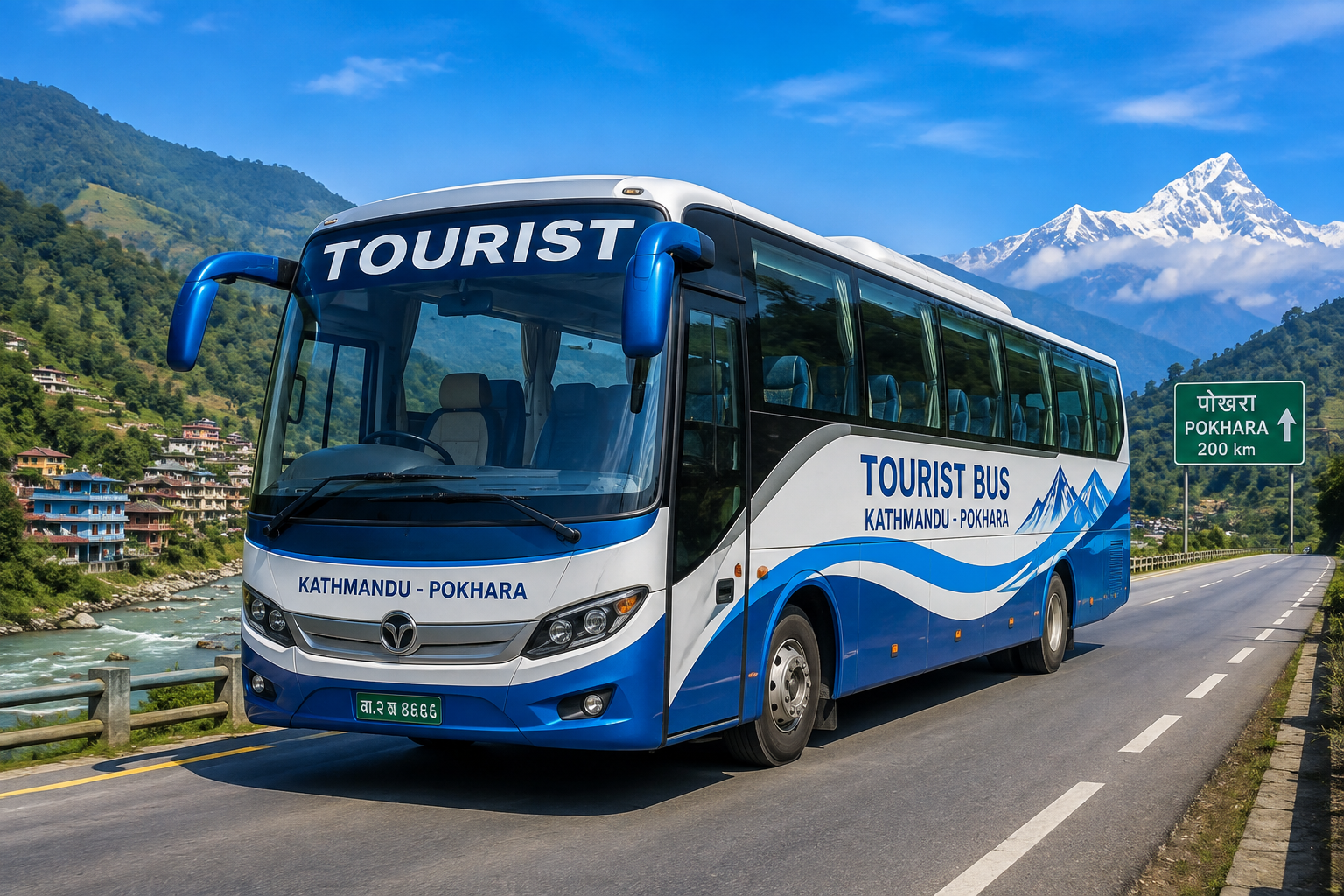
For the vast majority of travelers, tourist buses hit the sweet spot between affordability, comfort, and safety. They are designed specifically for visitors and operate on a fixed schedule, usually departing Kathmandu around 7:00 AM.
Standard vs. Luxury Buses
Tourist buses come in two main tiers. Standard tourist buses cost around $10 to $15 USD. They offer decent seating, air conditioning (though effectiveness varies), and a relatively safe ride.
Luxury or VIP buses (often labeled as “Sofa Seat” buses) cost between $20 and $30 USD. These buses feature spacious reclining seats in a 2×1 configuration, robust air conditioning, and sometimes even onboard Wi-Fi and complimentary bottled water. Greenline Tours and Swift Holidays are well-known operators in this space.
The Experience
The bus journey typically takes between 7 and 9 hours, depending on traffic and road conditions. Most tourist buses depart from Kantipath or the Sorhakhutte area, just outside the main tourist hub of Thamel.
The drive takes you along the Trishuli River, offering fantastic views of deep gorges, suspension bridges, and hillside villages. The buses make two or three scheduled stops for bathroom breaks and meals at highway restaurants. It is a slow, rhythmic way to see the Nepalese countryside, though the winding roads can induce motion sickness in sensitive travelers.
Pros and Cons
Pros:
- Affordability: Highly cost-effective for budget-conscious travelers.
- Safety: Generally safer and better maintained than local public buses.
- Scenery: Offers a ground-level view of Nepal’s stunning landscapes.
Cons:
- Travel Time: Can take up an entire day of your vacation.
- Road Conditions: Dust, bumps, and potential traffic jams along the Prithvi Highway.
- Early Departures: You must be ready to leave by 6:30 AM or 7:00 AM.
Local Minibuses (Microbuses): The Budget Option
If you miss the early morning tourist buses, you can always catch a local microbus. These small vans leave throughout the day from the Kalanki bus park on the ring road of Kathmandu.
The Experience
Microbuses are exactly what they sound like: small vans packed with locals traveling between the two cities. They are fast, aggressive, and incredibly cheap. Drivers know the roads intimately and tend to drive at high speeds, weaving through traffic to shave time off the journey.
Pros and Cons
Pros:
- Cost: The cheapest option available, usually under $10 USD.
- Flexibility: Departures happen all day long, leaving whenever the van is full.
- Speed: Often slightly faster than large tourist buses due to their smaller size.
Cons:
- Comfort: Seats are cramped, legroom is minimal, and luggage is often strapped to the roof.
- Safety: The aggressive driving style is not for the faint of heart.
- Convenience: Getting to the local bus park with heavy luggage can be a hassle.
Hiring a Private Vehicle or Taxi
If you want the flexibility of a road trip without the stress of driving, hiring a private car, jeep, or taxi is an excellent choice. This option is particularly popular for families, small groups, or travelers with heavy luggage.
The Experience
With a private vehicle, you control the schedule. You can depart Kathmandu at noon, stop at the Manakamana cable car along the way, or pause whenever you see a perfect photo opportunity. The drive still takes around 6 to 8 hours, but the comfort level is significantly higher than a bus.
You can arrange a private transfer through your hotel or a local travel agency. A standard sedan is fine for a small group, while a larger SUV or Jeep is better for groups of four or more.
Pros and Cons
Pros:
- Flexibility: Leave when you want and stop where you want.
- Comfort: Air-conditioned, private space with door-to-door service from your hotel in Kathmandu to your hotel in Pokhara.
- Group Savings: If splitting the cost among four people, it can be surprisingly affordable.
Cons:
- Cost: A private car ranges from $100 to $150 USD, while a jeep can cost up to $200 USD.
- Traffic: You are still subject to the same highway traffic and roadwork delays as the buses.
Riding a Motorcycle: The Adventurer’s Choice
For thrill-seekers and experienced riders, taking a motorcycle from Kathmandu to Pokhara is the ultimate adventure. Renting a Royal Enfield or a dirt bike gives you an unfiltered connection to the landscape.
The Experience
Riding allows you to feel the change in temperature as you descend from the Kathmandu valley and cruise alongside the rushing rivers. You can take detours off the main highway to explore hidden villages or take breaks at roadside tea houses.
However, this is not an activity for novice riders. Traffic in Nepal is chaotic. You will share the road with massive trucks, aggressive buses, stray animals, and pedestrians. Dust and exhaust fumes can be intense, so protective gear and a good face mask are mandatory.
Pros and Cons
Pros:
- Freedom: Total control over your route, speed, and stops.
- Adventure: An immersive, thrilling way to experience the topography of Nepal.
- Convenience in Pokhara: You instantly have a vehicle to explore the surrounding areas of Pokhara, like Sarangkot or the Peace Pagoda.
Cons:
- Safety: The most dangerous option due to unpredictable traffic and poor road surfaces.
- Physical Toll: Riding for 7-9 hours in dusty, noisy conditions is exhausting.
- Logistics: You must handle rental agreements, potential breakdowns, and navigation yourself.
Practical Tips for Your Journey
Regardless of how you choose to travel, a little preparation goes a long way in Nepal. Here are some essential tips to ensure a smooth trip to Pokhara.
Best Time to Travel
The best times to travel between Kathmandu and Pokhara are during the spring (March to May) and autumn (September to November). During these months, the weather is clear, road conditions are at their best, and flights operate smoothly with minimal weather delays.
Avoid road travel during the monsoon season (June to August) if possible. Heavy rains trigger landslides along the Prithvi Highway, frequently blocking the road for hours or even days. If you must travel during the monsoon, flying is highly recommended.
Booking Recommendations
- Flights: Book your flights a few weeks in advance during peak season. You can easily book online through airline websites or via local travel agents.
- Buses: You can buy tourist bus tickets one or two days before your departure. Most hotels and travel agencies in Thamel will arrange this for you for a tiny commission.
- Private Cars: Arrange these at least a day in advance through a reputable travel desk to ensure you get an experienced driver and a well-maintained vehicle.
Safety Considerations
If taking a bus or car, pack a small day bag with your essentials (passport, wallet, medication, water) to keep at your seat. Large luggage will go in the trunk or under the bus.
If you are prone to motion sickness, take medication an hour before the road journey begins. The continuous curves of the mountain roads are notorious for causing nausea. Finally, always carry some cash in small denominations for buying snacks or using restrooms at highway stops.
Conclusion
Traveling from Kathmandu to Pokhara is an integral part of the Nepal experience. Whether you choose the breathtaking efficiency of a 30-minute flight, the affordable rhythm of a tourist bus, the personalized comfort of a private car, or the raw thrill of a motorcycle ride, your journey sets the stage for the adventures awaiting you in Pokhara.
Review your budget, assess your tolerance for long road trips, and pick the option that best fits your travel style. Once you arrive and catch your first glimpse of Mount Machhapuchhre reflecting in Phewa Lake, every bump in the road will feel completely worth it. Have a safe journey, and enjoy the magic of Nepal!