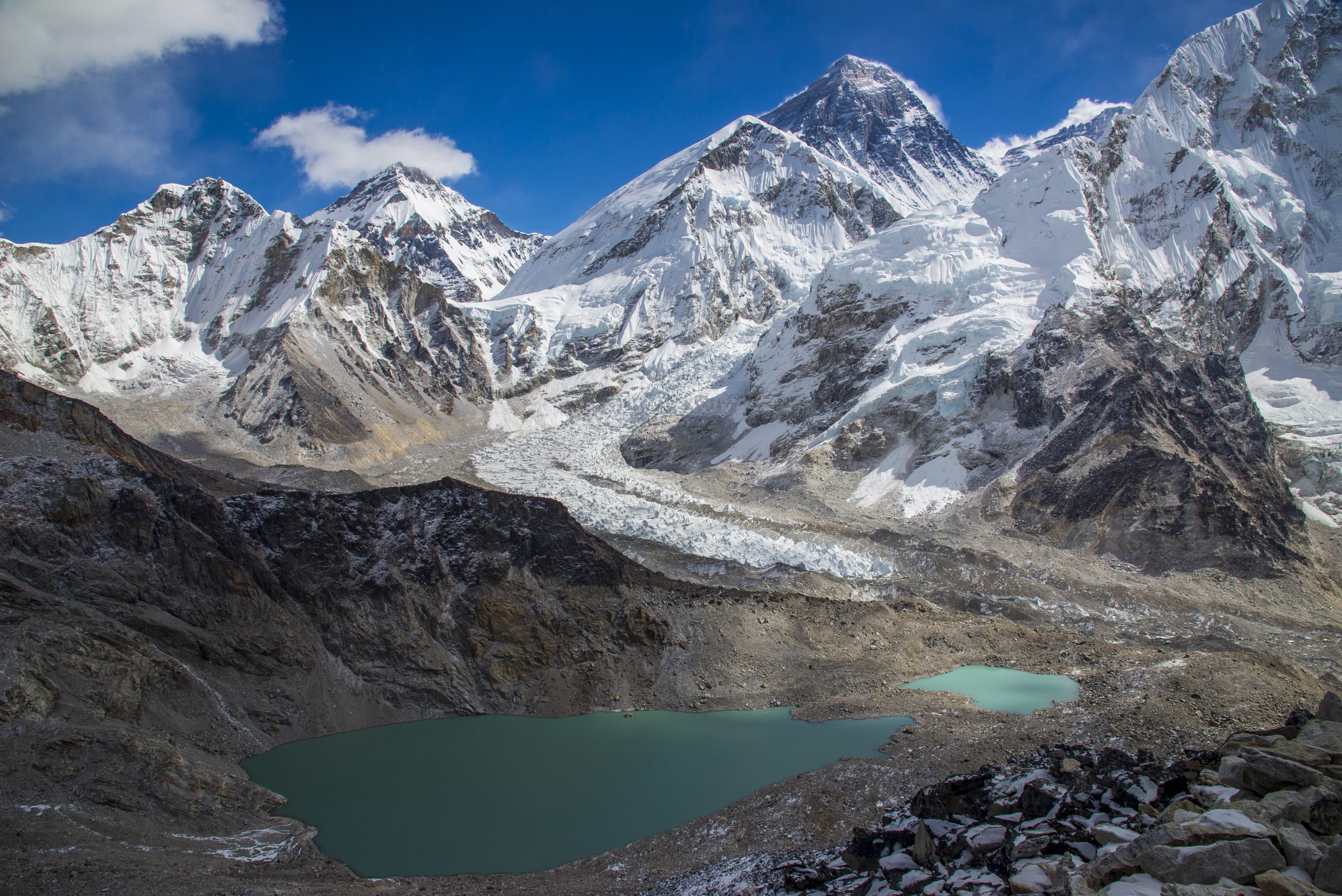
Deep in the heart of the Nepalese Himalayas sits a dark, unassuming ridge that offers one of the most spectacular sights on the planet. Kala Patthar, which translates to “Black Rock” in Nepali, might not have the fame of Mount Everest itself, but it holds a secret that every seasoned trekker knows. If you want to actually see the summit of Mount Everest, you do not go to Everest Base Camp. You go to Kala Patthar.
Everest Base Camp sits in a valley, and the colossal shoulder of Mount Everest blocks the view of its own peak. Kala Patthar, rising to an elevation of 5,545 meters (18,192 feet), provides the perfect vantage point. This guide dives deep into everything you need to know about tackling this iconic trekking destination, from the first step on the trail to the breathtaking summit views.
Introduction to Kala Patthar: Location and Significance
Kala Patthar is located on the south ridge of Pumori in the Nepalese Himalayas above Gorak Shep. While it is technically a peak, it is considered a minor summit or a trekking peak because of its relatively modest prominence compared to the giants surrounding it.
The significance of Kala Patthar lies entirely in its location. It sits directly across from the Khumbu Icefall and Mount Everest. For decades, it has served as the ultimate turnaround point for trekkers on the Everest Base Camp route. Reaching the top of this rocky outcrop represents the highest altitude most trekkers will ever reach without climbing equipment. It is a milestone, a physical challenge, and a spiritual high point wrapped into one demanding climb.
The Trekking Experience: Route, Difficulty, and What to Expect
Trekking to Kala Patthar is almost always done as part of the classic Everest Base Camp (EBC) trek. You do not just hike Kala Patthar; you earn it through days of gradual ascent.
The Route
Your journey begins with a thrilling flight into Tenzing-Hillary Airport in Lukla. From there, the trail winds through the Dudh Kosi river valley. You will pass through vibrant Sherpa villages like Phakding and Monjo before tackling the steep ascent to Namche Bazaar, the bustling capital of the Khumbu region.
After acclimatizing in Namche, the route pushes higher to Tengboche, home to the famous Tengboche Monastery. The air thins noticeably as you continue to Dingboche, then Lobuche, and finally to the bleak, sandy outpost of Gorak Shep at 5,164 meters (16,942 feet). Gorak Shep serves as your launchpad for Kala Patthar.
The actual ascent of Kala Patthar from Gorak Shep takes about two to three hours. The trail is entirely uphill, weaving through loose scree and boulders. There is no technical climbing involved—you do not need ropes, crampons, or an ice axe under normal conditions. It is a straight, relentless hike.
The Difficulty Level
Do not let the lack of technical gear fool you. The climb is incredibly difficult due to the extreme altitude. At 5,545 meters, the air contains only about 50% of the oxygen found at sea level. Every step feels heavy. Your heart pounds, and your breathing becomes ragged.
The difficulty is largely mental. You are usually attempting this climb in the dark, freezing hours of the early morning to catch the sunrise. The combination of cold, exhaustion from the previous days of trekking, and oxygen deprivation makes this the hardest day of the entire EBC trek.
What to Expect
Expect to be challenged. Expect freezing winds that bite through your layers. However, expect a profound sense of camaraderie on the trail. You will see bobbing headlamps ascending the black hill in a silent, synchronized procession of determination. You should also expect the physical discomfort to vanish the moment the sun breaks over the horizon.
The Best Time to Visit Kala Patthar
The Himalayas operate strictly on two main trekking windows. Outside of these periods, weather conditions become dangerous and views disappear behind thick clouds.
Spring (March to May)
Spring brings warmer temperatures and blooming flora in the lower valleys. As you climb higher, the weather stabilizes, offering clear, crisp views. This is also expedition season for Mount Everest. From Kala Patthar, you can look down into Everest Base Camp and see a sprawling city of bright yellow tents preparing for the summit push.
Autumn (September to November)
Autumn is the most popular time to visit. The monsoon rains of summer have washed the sky clean, leaving the air incredibly clear. The visibility during October and November is unmatched, making it the premier season for photography. The temperatures are colder than in spring, especially at the summit of Kala Patthar, but the guarantee of clear skies makes the chill worth it.
Avoid the monsoon season (June to August) due to leeches, mudslides, and constant rain. Winter (December to February) is bitterly cold, and heavy snowfall can block the passes and close the lodges at Gorak Shep.
Breathtaking Views: Everest and Beyond
The view from Kala Patthar is widely considered one of the greatest mountain panoramas on earth. As you stand on the summit, grabbing onto prayer flags whipping in the wind, you are surrounded by giants.
Looking east, Mount Everest dominates the skyline. You can clearly see the dark, triangular summit pyramid catching the light. Directly in front of Everest stands Nuptse (7,861m), a massive wall of fluted ice and rock that looks almost closer and taller than Everest itself from this angle. To the north, the perfectly symmetrical peak of Pumori (7,161m) towers directly behind you.
You also get a bird’s-eye view of the treacherous Khumbu Icefall. You can trace the route climbers take as they navigate the shifting seracs and deep crevasses on their way to Camp 1.
Sunrise vs. Sunset: Many trekkers tackle Kala Patthar at sunrise. The early morning light hits Everest first, turning the black rock into a glowing ember of orange and pink. However, a sunset trek is an insider secret. During sunset, the sun drops behind you, projecting a spectacular alpenglow directly onto the face of Everest. The downside to sunset is that you must navigate the steep, rocky descent back to Gorak Shep in the dark, making headlamps essential.
Tips for Trekkers: Gear, Preparation, and Acclimatization
Success on Kala Patthar requires respect for the mountain and careful preparation.
Physical Preparation
You need strong cardiovascular endurance and leg strength. Months before your trek, begin a regimen of hiking, running, or cycling. Practice hiking with a weighted daypack. Stair climbing is particularly effective, as the trek involves thousands of uneven stone steps.
Essential Gear
Layering is your best defense against the volatile Himalayan weather.
* Base Layers: Moisture-wicking merino wool tops and bottoms.
* Insulation: A high-quality down jacket is mandatory for the Kala Patthar summit.
* Outer Shell: Windproof and waterproof jacket and pants.
* Footwear: Broken-in, waterproof trekking boots with good ankle support.
* Accessories: A warm beanie, polarized sunglasses (to prevent snow blindness), heavy-duty gloves, and a buff to protect your lungs from the cold, dry air.
* Trekking Poles: Essential for saving your knees on the descent.
Acclimatization and Safety
Altitude sickness, or Acute Mountain Sickness (AMS), is the biggest threat.
* Ascend Slowly: Follow the rule of climbing high and sleeping low. Never skip your acclimatization days in Namche Bazaar and Dingboche.
* Hydrate: Drink at least 3 to 4 liters of water daily. Dehydration mimics and exacerbates altitude sickness.
* Listen to Your Body: Headaches, nausea, and dizziness are warning signs. Do not ignore them. If symptoms worsen, you must descend immediately.
Cultural and Natural Highlights Along the Trek
The journey to Kala Patthar is deeply woven with the rich culture of the Sherpa people and the stark beauty of Sagarmatha National Park.
As you trek, you will pass intricately carved Mani stones. Always walk to the left of these sacred stones. You will cross high, swaying suspension bridges draped in colorful prayer flags that carry mantras into the wind.
The Tengboche Monastery is a spiritual focal point. If you arrive at the right time, you can sit inside the vibrant, echoing halls and listen to the monks chanting their daily prayers.
Nature also puts on a show. In the lower altitudes, you walk through dense forests of rhododendron and pine. You might spot Himalayan thar (wild mountain goats) navigating sheer cliffs, or catch a glimpse of the colorful Danphe, Nepal’s national bird. Higher up, the landscape transitions into a stark alpine desert dominated by glaciers and the massive, shaggy yaks that transport goods up the valley.
Stories from the Trail: The Final Push
Every trekker has a story about Kala Patthar. It is the crucible of the Everest Base Camp trek.
One trekker recounted waking up at 3:30 AM in Gorak Shep. The water in her bottle had frozen solid inside her room. Stepping outside, the cold was a physical weight. The climb began in absolute silence, save for the crunch of boots on frozen dirt and heavy, labored breathing. About halfway up, doubt set in. Her legs felt like lead, and every ten steps required a minute of rest.
But then, the sky began to turn a deep, bruised purple. The silhouette of Mount Everest slowly emerged from the darkness. As she reached the final rocky scramble to the summit, the first ray of sunlight struck the peak of Everest. Suddenly, the freezing temperature did not matter. The exhaustion melted away. Standing by the prayer flags at the summit, surrounded by the highest mountains in the world, she described crying—not from the cold, but from the overwhelming scale and beauty of the planet. It is a moment of pure, hard-earned triumph.
Frequently Asked Questions (FAQs)
1. Where exactly is Kala Patthar?
Kala Patthar is located in the Khumbu region of eastern Nepal, situated on the south ridge of Pumori, directly above the settlement of Gorak Shep.
2. How high is Kala Patthar?
The summit of Kala Patthar sits at an elevation of 5,545 meters (18,192 feet) above sea level.
3. Do I need technical climbing skills?
No. Kala Patthar is a trekking peak. It requires no ropes, crampons, or ice axes. It is a steep hike, not a technical climb.
4. What permits do I need?
You need two permits: the Khumbu Pasang Lhamu Rural Municipality Entrance Permit and the Sagarmatha National Park Entry Permit.
5. How much do the permits cost?
The rural municipality permit costs roughly $15 USD, and the national park permit costs about $25 USD.
6. Do I need a guide to hike Kala Patthar?
As of recent regulations in Nepal, foreign trekkers are required to hire a licensed guide for trekking in most national parks, including the Everest region.
7. How long does the trek to Kala Patthar take? S
tarting from Lukla, it typically takes 7 to 9 days to reach Kala Patthar, factoring in necessary acclimatization days. The entire round trip takes about 12 to 14 days.
8. Can I see Mount Everest from Base Camp?
No. The view of Mount Everest’s peak is blocked by the Lho La ridge and the west shoulder of Everest from Base Camp. You must hike Kala Patthar for the iconic view.
9. How hard is the climb from Gorak Shep?
It is physically demanding due to the steep incline and extreme altitude. It takes about 2 to 3 hours to ascend and 1.5 hours to descend.
10. Is it better to go at sunrise or sunset?
Sunrise offers clear morning skies but bitter cold. Sunset offers warmer hiking temperatures and incredible alpenglow on Everest, but requires descending in the dark.
11. What is the weather like at the summit?
It is almost always freezing. Temperatures often drop below -15°C (5°F) before sunrise, accompanied by harsh, biting winds.
12. How do I prevent altitude sickness?
Ascend gradually, take mandatory acclimatization days in Namche and Dingboche, stay highly hydrated, and consider consulting a doctor about taking Diamox.
13. What should I pack for summit day?
A heavy down jacket, windproof layers, a beanie, warm gloves, a headlamp, trekking poles, a camera, and plenty of water in an insulated bottle.
14. Are there teahouses on Kala Patthar?
No. The highest teahouses are located at the base of the mountain in Gorak Shep. You will hike up and return to Gorak Shep to eat and sleep.
15. Can I get drinking water on the trail?
You can buy bottled water at teahouses, but it is highly recommended to bring a water purification system (like tablets or a UV filter) to purify tap or stream water to reduce plastic waste.
16. Is there mobile network or Wi-Fi available?
Yes, you can purchase an Everest Link Wi-Fi card to use at teahouses, and local Ncell SIM cards often get 3G/4G coverage at the top of Kala Patthar!
17. What food is available at Gorak Shep?
Teahouses serve carbohydrate-heavy meals like Dal Bhat (lentils and rice), pasta, potatoes, soups, and porridge. Meat is best avoided at this altitude as it is all carried up on foot.
18. How much cash should I bring?
Bring enough Nepalese Rupees to cover all your meals, hot showers, charging devices, and tips for the duration of the trek, as there are no ATMs past Namche Bazaar. Estimate about $30-$40 USD per day.
19. What happens if I get injured or severely sick?
If you suffer from severe AMS or injury, your guide will arrange a helicopter rescue. Make sure you have comprehensive travel insurance that covers high-altitude helicopter evacuation.
20. Can beginners hike Kala Patthar?
While beginners with excellent fitness can do it, previous high-altitude hiking experience is highly recommended due to the grueling nature of the multi-day trek and the extreme elevation.
21. Is there an age limit for the trek?
There is no strict age limit, but trekkers should be in excellent health. Children under 12 and elderly individuals should consult heavily with medical professionals before attempting.
22. How cold does it get at night in the teahouses?
Teahouse bedrooms are unheated and can drop below freezing. A high-quality sleeping bag rated for -15°C or lower is essential.
23. Can I leave my heavy backpack at Gorak Shep?
Yes. You should leave your main pack in your teahouse room and only carry a small daypack with water, a camera, and extra layers up Kala Patthar.
24. Are there toilets on Kala Patthar?
There are no facilities on the mountain. You must use the restrooms at the teahouses in Gorak Shep before you begin your ascent.
25. Why are there so many prayer flags at the top?
In Tibetan Buddhism, prayer flags are believed to spread goodwill and compassion into the surrounding space as the wind blows through them. Trekkers and locals leave them at the summit as an offering of peace and a marker of success.