
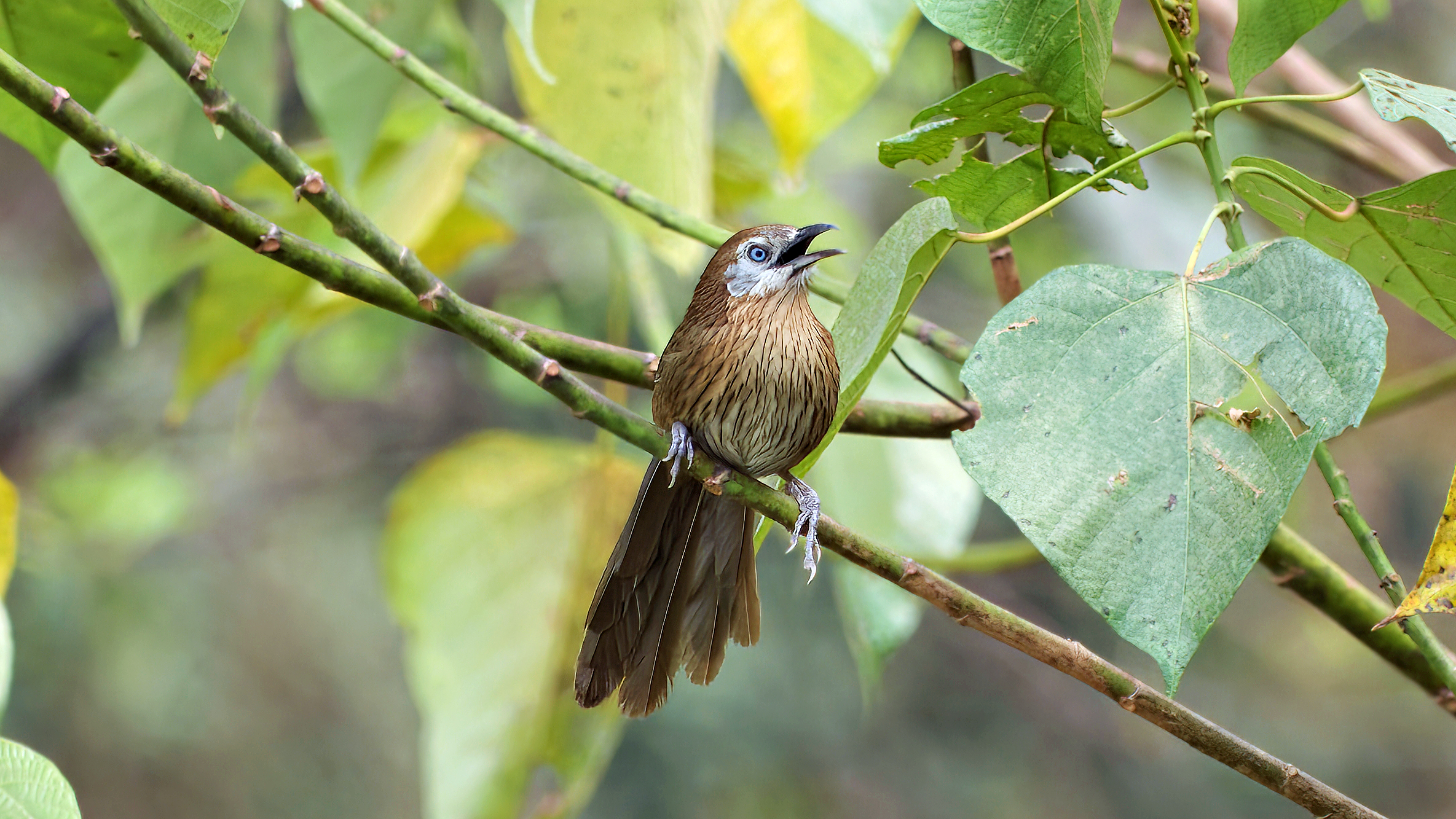
The Hidden Symphony of the Himalayas: Discovering Nepal’s Spiny Babbler
Deep in the mid-hills of the Himalayas, a rustling in the dense scrubland gives away a well-kept secret. Before you see anything, you hear it—a melodious, flute-like song echoing through the terraced slopes. This song belongs to the Spiny Babbler (Turdoides nipalensis), known affectionately in Nepal as the Kande Bhyakur.
If you are a bird enthusiast, the Spiny Babbler holds a near-mythical status. It is the only bird species entirely endemic to Nepal. This means you cannot find it anywhere else on Earth. It does not cross the borders into India or China. It lives exclusively within the specific geographic bounds of the Nepalese mid-hills. Because of this extreme geographic restriction, the bird serves as a living emblem of Nepal’s unique natural heritage.
This comprehensive guide takes you deep into the world of the Spiny Babbler. We will explore its fascinating history of rediscovery, its unique physical traits, its secretive behavior, and the vital role it plays in the intricate web of Himalayan biodiversity.
A Tale of Disappearance and Discovery
To understand the allure of the Spiny Babbler, we must look back at its remarkable history. The story of this bird reads like a mystery novel.
In the mid-19th century, western scientists first documented the Spiny Babbler. Brian Houghton Hodgson, a British resident in Nepal and a passionate naturalist, collected the first specimens. Hodgson employed local Nepalese hunters and artists to collect and paint hundreds of bird species. Among these collections was a peculiar brown bird with stiff, spiny feathers. The specimens made their way back to museums in Europe, where scientists officially categorized the bird.
Then, silence fell.
For over a century, no scientist recorded a single confirmed sighting of the Spiny Babbler. As the decades rolled by, ornithologists began to fear the worst. The international scientific community largely assumed the bird had gone extinct, a victim of undocumented environmental changes or simply an incredibly rare species that faded away.
Everything changed in the late 1940s. The celebrated American ornithologist Sidney Dillon Ripley led an expedition to Nepal. Ripley traveled through the Kathmandu Valley and the surrounding hills, meticulously documenting birdlife. One day, a local guide brought him a specimen of a bird he did not immediately recognize. Upon closer inspection of the stiff feather shafts, Ripley realized what he held. The Spiny Babbler was not extinct. It was simply hiding.
his dramatic rediscovery transformed the Spiny Babbler from a dusty museum curiosity into a symbol of resilience. It proved that the dense, thorny scrublands of Nepal still harbored secrets waiting to be uncovered. Today, this story inspires conservationists and birders alike, reminding us that nature can endure if given the chance.
Physical Characteristics: Designed for the Underbrush
When you finally catch a glimpse of the Spiny Babbler, you might wonder why such an unassuming bird commands such attention. It does not possess the vibrant plumage of a peacock or the sheer size of an eagle. Instead, its beauty lies in its perfect adaptation to its environment.
The “Spiny” Feathers
The Spiny Babbler is a medium-sized bird, measuring roughly 22 to 24 centimeters in length from the tip of its beak to the end of its tail. The most defining physical trait—and the source of its name—is the unique texture of its plumage. The shafts of the feathers on its crown, neck, and upper back are stiff and extended, protruding slightly beyond the soft barbs.
hese stiff shafts look like tiny spines or bristles. If you were to touch them, they would feel surprisingly rigid. These “spines” serve a practical purpose. The bird spends its entire life navigating through dense, thorny bushes, thickets, and rough scrubland. The rigid feather shafts likely provide a layer of physical protection, preventing the bird’s softer plumage from snagging and tearing on sharp thorns and rough branches.
Coloration and Camouflage
The Spiny Babbler wears a coat of earthy tones. Its upperparts are a rich brownish-gray, mottled with darker streaks. The underbelly is slightly lighter, blending into a pale buff color. This muted color palette provides exceptional camouflage. When the bird sits motionless among the dried leaves, twigs, and shaded undergrowth of its habitat, it becomes practically invisible to predators like hawks and snakes.
Beak and Limbs
Take a close look at its beak, and you will notice a slight downward curve. This dark, sturdy bill acts as a precision tool. The bird uses it to probe into leaf litter, overturn small pebbles, and extract insects from tight crevices in tree bark.
Its legs are another marvel of adaptation. The Spiny Babbler has strong, thick legs with robust claws. Unlike birds that spend most of their time soaring through the sky, the Spiny Babbler is a terrestrial acrobat. It relies on its powerful legs to hop rapidly along the ground, scramble up steep banks, and aggressively push its way through tightly woven thickets.
The Tail
The tail is noticeably long and slightly graduated, meaning the outer tail feathers are shorter than the central ones. This long tail acts as a rudder, providing balance and agility as the bird makes quick, erratic movements through the dense brush.
The Ideal Home: Habitat and Geography
You will not find the Spiny Babbler in the high, snow-capped peaks of Mount Everest, nor will you find it in the flat, tropical plains of the Terai. This bird has carved out a highly specific niche in the middle.
The Mid-Hills Region
The Spiny Babbler lives exclusively in the mid-hill regions of Nepal, specifically within the Mahabharat range and the Churia hills. It typically thrives at altitudes ranging from 900 to 2,100 meters (roughly 3,000 to 7,000 feet) above sea level. This specific elevation band offers a temperate climate, avoiding the extreme freezing temperatures of the high Himalayas and the intense heat of the southern plains.
Scrublands and Thickets
If you want to find a Spiny Babbler, you must look for the right vegetation. These birds despise open spaces. They avoid dense, mature forests with high canopies, as these environments lack the low-level cover they require.
Instead, they seek out scrublands, forest edges, heavily vegetated ravines, and secondary growth areas. They love places where bushes grow thick and tangled. Often, they make their homes on steep, terraced hillsides where agricultural land meets wild brush. They frequently inhabit areas choked with thorny shrubs like Rubus (wild raspberries) and Berberis (barberry). These formidable, spiky plants offer the perfect fortress. Inside these dense thickets, the Spiny Babbler feels safe from airborne predators.
The Kathmandu Valley Connection
Historically, the Kathmandu Valley and its surrounding rim provided an abundant habitat for the Spiny Babbler. The slopes of Phulchowki, Shivapuri, and Nagarjun hills remain some of the best places for birdwatchers to spot them. However, as the city has expanded, the bird has retreated higher up the slopes to find undisturbed brush.
A Master of Hide and Seek: Behavior
Watching a Spiny Babbler requires immense patience. They are notoriously shy, secretive, and elusive. Even seasoned birdwatchers can spend days in the right habitat without seeing a single feather.
The Undergrowth Lifestyle
Spiny Babblers spend the vast majority of their time on or very close to the ground. They are reluctant fliers. When they do take to the air, their flight is weak, labored, and brief. They prefer to flutter heavily from one bush to the next, diving back into the cover of vegetation as quickly as possible.
Instead of flying, they move by hopping. They bound across the ground with surprising speed, using their strong legs to cover rough terrain. They slip through the narrowest gaps in the vegetation like feathered mice.
Social Structure
Babblers, as a family, are known for being highly social birds, and the Spiny Babbler is no exception. They rarely live alone. You will almost always find them in small, tight-knit flocks, usually consisting of three to eight individuals. These small groups often comprise a breeding pair and their offspring from previous seasons.
Living in a group offers significant advantages. Many eyes make it easier to spot approaching predators. Furthermore, the group coordinates its foraging efforts, sweeping through an area together to flush out hidden insects.
The Voice of the Hills
While they are difficult to see, they are incredibly easy to hear. The Spiny Babbler is famous for its vocalizations.
Their primary song is a loud, clear, and incredibly varied series of whistles and trills. It has a rich, flute-like quality that carries beautifully across the valleys. They use this song primarily to establish territory and communicate with their flock. When a flock is foraging, the members constantly emit soft “chuckling” sounds to keep track of one another in the dense brush.
If a predator, like a feral cat or a bird of prey, comes too close, the flock switches to a harsh, chattering alarm call. This sudden, noisy outburst often startles the predator and gives the flock time to dive deeper into the thorny bushes.
Foraging and Diet: The Omnivore’s Menu
The Spiny Babbler is an opportunistic omnivore. Its diet changes slightly depending on the season, but it largely revolves around ground-dwelling invertebrates.
Insect Foraging
The majority of the Spiny Babbler’s diet consists of insects. Beetles, caterpillars, ants, spiders, and centipedes make up a significant portion of their daily calorie intake.
Watching a group forage is a fascinating experience. They work through the undergrowth like a tiny, feathered vacuum cleaner. They use their curved beaks to aggressively toss dead leaves aside, scrape at the loose topsoil, and pry apart rotting bark. They are meticulous searchers, leaving no stone unturned in their hunt for protein.
Fruits and Seeds
During the late summer and autumn, when insects become slightly less abundant, the Spiny Babbler supplements its diet with plant matter. They eat a variety of wild berries, small fruits, and seeds found in their scrubland habitat. The wild raspberries that grow abundantly in the Nepalese mid-hills are a particular favorite.
This varied diet ensures that the bird can survive year-round in an environment where food availability fluctuates with the seasons.
Breeding and Raising the Young
The breeding season brings a change in the Spiny Babbler’s behavior. As the harsh winter fades and the warmer temperatures of spring arrive, the flocks begin to focus on reproduction. The primary breeding season spans from April to July, coinciding with the pre-monsoon and early monsoon periods when insects are most abundant.
The Nesting Site
The Spiny Babbler builds its nest close to the ground, usually no higher than one or two meters up in a dense, thorny bush. The female takes the lead in selecting the site, choosing a spot heavily concealed by foliage to hide the nest from predators.
Building the Nest
The nest itself is a sturdy, cup-shaped structure. The birds use coarse grasses, twigs, dry leaves, and strips of bark to construct the outer frame. They line the inside with softer materials, such as fine rootlets, moss, and sometimes animal hair, creating a comfortable bed for the eggs.
Incubation and Fledging
The female typically lays a clutch of three to four eggs. These eggs possess a beautiful, vibrant blue color, a common trait among many babbler species. Both parents share the incubation duties, taking turns sitting on the eggs to keep them warm.
After roughly 14 days of incubation, the naked, blind chicks hatch. This is when the hard work truly begins. The chicks grow rapidly and demand a massive amount of food. Both parents—and sometimes other members of the flock, acting as “helpers”—work tirelessly to catch caterpillars and soft-bodied insects to feed the ravenous babies.
Within 12 to 14 days, the chicks develop their feathers and leave the nest. However, they remain dependent on their parents for several more weeks, following the flock and learning how to forage and hide.
The Ecological Role: A Vital Link in the Chain
Every species plays a role in its ecosystem, and the Spiny Babbler is an integral part of the Nepalese mid-hill environment.
Pest Control
Because they consume vast quantities of insects, Spiny Babblers act as natural pest controllers. They help keep the populations of caterpillars, beetles, and other leaf-eating insects in check. This natural regulation benefits the health of the local vegetation and even assists local farmers by reducing pests around agricultural borders.
Seed Dispersal
When Spiny Babblers eat wild berries and fruits, they ingest the seeds. As they move through their territory, they excrete these seeds in new locations. This process, known as seed dispersal, helps plants spread and regenerate, maintaining the health and diversity of the scrubland habitat.
The Food Web
Despite their best efforts to stay hidden, Spiny Babblers are a food source for other animals. Snakes, small carnivorous mammals, and birds of prey rely on small birds like the Babbler for sustenance. By existing in healthy numbers, the Spiny Babbler supports the populations of these higher-level predators.
Endemism: Why Being Unique Matters
The fact that the Spiny Babbler is endemic to Nepal is not just a neat piece of trivia; it holds massive scientific and ecological significance.
Endemic species are uniquely adapted to their specific, localized environments. They evolved alongside the specific plants, climate, and geography of their home range. Because their geographic range is restricted entirely to one country, the global survival of the Spiny Babbler rests entirely on the shoulders of Nepal. If the habitat in the Nepalese mid-hills disappears, the bird disappears from the planet entirely.
Endemic species also act as indicators of ecosystem health. A thriving population of Spiny Babblers tells conservationists that the mid-hill scrublands are healthy and balanced. If the bird’s numbers begin to plummet, it serves as an early warning system that the ecosystem is degrading.
Conservation Status and Modern Threats
Currently, the International Union for Conservation of Nature (IUCN) lists the Spiny Babbler as a species of “Least Concern.” This means that, at present, the species is not facing imminent global extinction. The population appears relatively stable across its specific range.
However, “Least Concern” does not mean “No Concern.” The Spiny Babbler faces significant, growing threats that require careful monitoring.
Habitat Loss and Urbanization
The biggest threat to the Spiny Babbler is the destruction of its habitat. The mid-hill regions of Nepal, particularly the Kathmandu Valley, are experiencing rapid urbanization. Forests and wild scrublands are continuously cleared to make way for new roads, housing developments, and infrastructure. As the concrete spreads, the thorny thickets disappear, leaving the Babbler with nowhere to live.
Agricultural Expansion
As the human population grows, farmers need more land to grow food. Terraced farming is expanding further up the hillsides, converting wild brush into cultivated fields. While the bird can tolerate living on the edges of agricultural land, it cannot survive in open, heavily managed fields devoid of thick cover.
Deforestation and Resource Extraction
Local communities rely heavily on the forests and scrublands for firewood, animal fodder, and building materials. Over-harvesting these resources degrades the habitat, thinning out the dense vegetation the bird requires for protection and nesting.
Climate Change
While the immediate impacts are still being studied, climate change poses a long-term threat. Shifts in temperature and rainfall patterns could alter the vegetation in the mid-hills, potentially shrinking the specific habitat zone the Spiny Babbler relies upon. Furthermore, changes in climate can affect insect populations, potentially disrupting the bird’s primary food source.
Conservation Efforts in Nepal
Recognizing the unique value of the Spiny Babbler, conservationists and the Nepalese government are taking steps to protect it.
Nepal has established a robust network of national parks and protected areas. The Shivapuri Nagarjun National Park, located right on the edge of the Kathmandu Valley, provides a crucial safe haven for the bird. Inside the park boundaries, strict laws prohibit deforestation and habitat destruction, allowing the scrublands to flourish.
Furthermore, community forestry programs in Nepal have proven incredibly successful. These programs give local communities the power and responsibility to manage their local forests sustainably. By educating locals about the importance of biodiversity and teaching sustainable harvesting practices, these programs help preserve the delicate balance between human needs and wildlife conservation.
A Symbol of National Pride: Cultural Significance
In Nepal, the Spiny Babbler is more than a biological specimen; it is a point of intense national pride. Because it belongs solely to Nepal, it holds a special place in the hearts of the people.
In Art and Literature
The Kande Bhyakur frequently appears in Nepalese literature, poetry, and art. Writers often use the bird as a metaphor for the hidden beauty of the Nepalese landscape. Its elusive nature represents the mysteries of the mountains, while its beautiful song symbolizes the enduring spirit of the nation.
Eco-Tourism and Birdwatching
The Spiny Babbler also plays a significant role in Nepal’s growing eco-tourism industry. Birdwatchers from all over the globe travel to Nepal with the explicit goal of adding the Spiny Babbler to their life lists.
This specific demand creates a powerful economic incentive for conservation. When international tourists hire local guides, stay in local lodges, and pay park entry fees specifically to see endemic wildlife, it proves to the local communities that a living Spiny Babbler is far more valuable than a cleared patch of land. This eco-tourism revenue helps fund local schools, clinics, and infrastructure, directly tying the community’s well-being to the survival of the bird.
Searching for the Babbler: A Guide for Enthusiasts
If you plan to visit Nepal to find the Spiny Babbler, you must prepare for a challenge. This is not a bird that will land on your balcony.
The best time to look for them is during the early morning hours, just as the sun begins to warm the hillsides. This is when the birds are most active, aggressively foraging for their breakfast. During the breeding season in spring, they are far more vocal, making it easier to track them down by sound.
Head to the edges of the Shivapuri Nagarjun National Park or the slopes of Phulchowki. Walk slowly and quietly along the trails. Listen closely for their distinct, flute-like whistles or the rustling of dry leaves in the undergrowth.
Do not expect to see them perched proudly on a high branch. Instead, watch the lower layers of the bushes. Look for quick, darting movements close to the ground. If you are patient and lucky, you might just catch a glimpse of that spiky plumage and long tail disappearing into the thorns.
Conclusion: Protecting the Pride of Nepal
The Spiny Babbler stands as a testament to the incredible biodiversity hidden within the Himalayan mid-hills. Its journey from presumed extinction to a celebrated symbol of Nepalese nature is a story of hope. It reminds us that our planet still holds secrets in its tangled thickets and quiet ravines.
However, the future of the Spiny Babbler is entirely in our hands. Because its existence is tied strictly to the borders of Nepal, the loss of its habitat would mean the loss of the species forever. Protecting the Kande Bhyakur requires a delicate balance. It means supporting sustainable development that respects the natural boundaries of the ecosystem. It means valuing the wild, tangled, thorny scrublands just as much as we value pristine high-altitude forests.
When we protect the Spiny Babbler, we do more than save a single bird species. We protect the intricate food web of the mid-hills. We safeguard the natural heritage of an entire nation. And we ensure that future generations will still be able to stand on a quiet hillside in Nepal and listen to the hidden symphony of the mountains.