
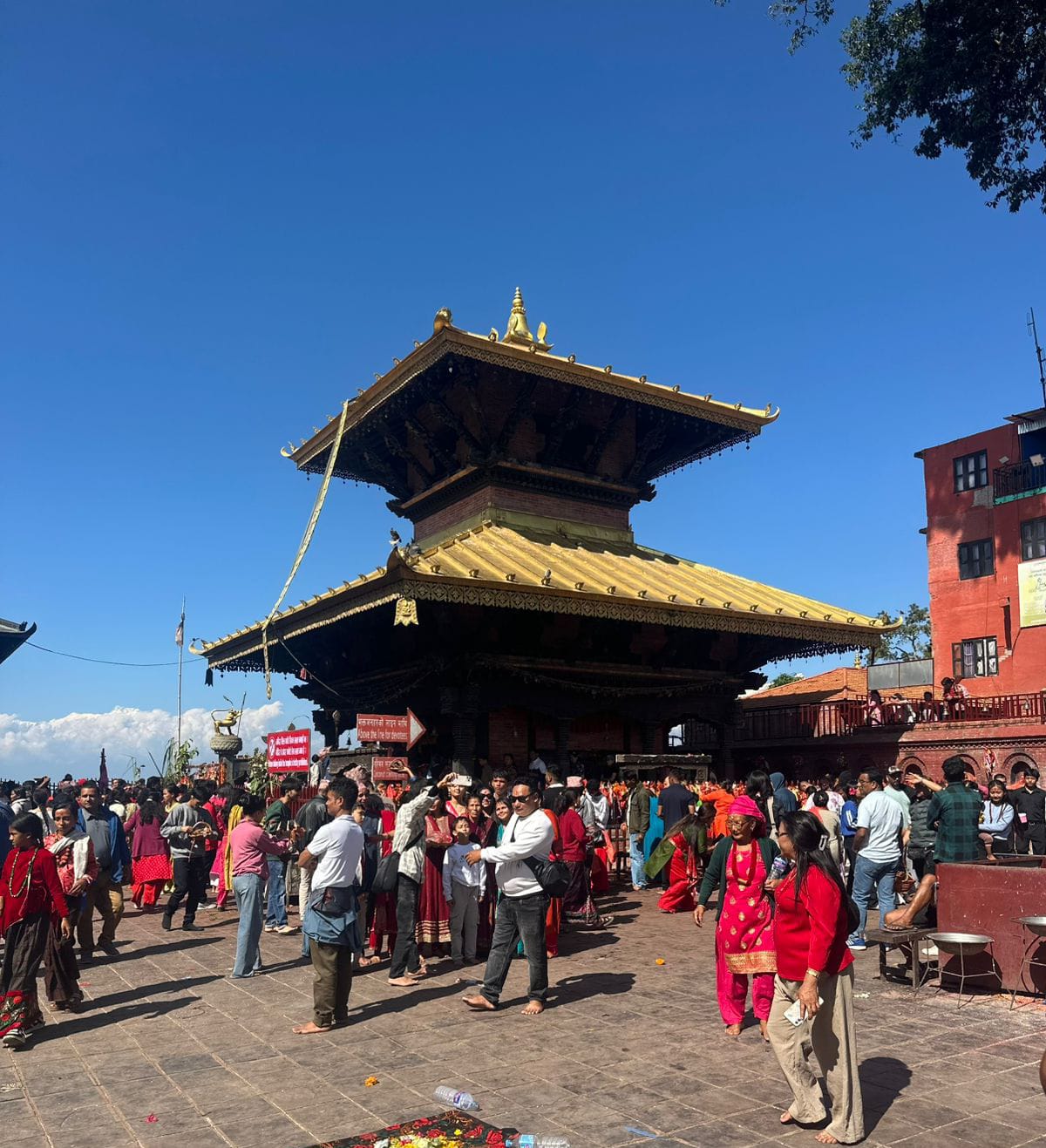
High above the winding river valleys of central Nepal, a legendary sanctuary calls out to travelers and pilgrims alike. Manakamana Temple represents one of the most significant and fascinating spiritual sites in the Himalayas. For centuries, people have traveled to this sacred ridge in the Gorkha district to ask the resident goddess to grant their deepest wishes.
Whether you seek a spiritual awakening, a deeper understanding of Nepalese culture, or simply a breathtaking journey through the mountains, Manakamana offers an unforgettable experience. In this comprehensive guide, we will explore the captivating history, stunning architecture, unique rituals, and practical travel tips you need to know to make the most of your visit.
What is Manakamana Temple?
To understand the magic of this destination, you first need to understand its name. In the Nepali language, “mana” translates to heart or soul, while “kamana” translates to wish or desire. Together, Manakamana literally means the “wish-fulfilling goddess.”
The temple serves as a shrine to Goddess Bhagwati, a highly revered and powerful incarnation of the Hindu Goddess Parvati. According to Hindu mythology, Bhagwati protects her devotees from evil and grants prosperity, health, and success. Every year, over a million visitors make the journey to her hilltop abode. They come to ask for blessings for new marriages, success in business ventures, good grades in school, and the safe birth of children. Once a wish comes true, custom dictates that the devotee must return to the temple to offer thanks.
The Captivating Legend and History
The origins of Manakamana read like a mythological epic, deeply intertwined with the royal history of Nepal. To fully appreciate the site, we must travel back to the 17th century during the reign of the Gorkha kings.
The Divine Queen of Gorkha
Legend tells us that the Queen of Gorkha possessed extraordinary divine powers. However, she kept her true identity a strict secret. Only her most devoted servant, an ascetic saint named Lakhan Thapa, knew that she was an incarnation of the goddess.
One fateful day, the King of Gorkha accidentally walked in on his wife while she was in her divine, multi-armed goddess form. Lakhan Thapa stood nearby in the form of a lion. The shock of witnessing this divine manifestation proved too much for the mortal king, and he died shortly after.
According to the customs of the era, the Queen committed Sati, a historical practice where a widow sacrificed herself on her husband’s funeral pyre. Before she stepped into the flames, she turned to her grieving servant, Lakhan Thapa. She promised him that she would return to the world to guide and protect her people.
The Bleeding Stone
Six months later, a humble farmer was plowing his terraced fields on a steep hillside in the Gorkha district. Suddenly, the tip of his plow struck a massive stone buried in the earth. To his absolute terror and shock, pure milk and rich, red blood began pouring out of the rock.
News of the miracle spread quickly across the villages. When Lakhan Thapa heard the story, he immediately recognized what had happened. He rushed to the field, knowing his beloved Queen had fulfilled her promise. The saint performed complex Hindu rituals, chanted sacred mantras, and finally stopped the flow of milk and blood.
Lakhan Thapa established the very first shrine on that exact spot to protect the sacred stone. He dedicated his life to serving the goddess there. To honor his devotion, the temple instituted a strict rule that remains in place today: the chief priest of Manakamana Temple must always be a direct descendant of Lakhan Thapa.
The Architectural Marvel of the Temple
When you finally step into the main courtyard of Manakamana, the sheer beauty of the temple immediately commands your attention. The structure serves as a masterclass in traditional Nepalese pagoda-style architecture.
The Pagoda Design
The temple features a spectacular four-tiered roof. Each tier grows successively smaller as it reaches toward the sky, creating a pyramid-like shape. Shining brass plates cover the roofs, catching the harsh mountain sunlight and acting as a beacon that you can see from miles away.
A golden finial, known as a gajur, sits proudly at the very peak of the roof. In Hindu architecture, the gajur represents the connection between the earthly realm and the divine heavens.
Intricate Woodwork and Carvings
As you walk around the base of the temple, take time to study the incredible woodwork. Master craftsmen carved the wooden struts that support the heavy brass roofs. These carvings depict various Hindu deities, fierce mythological creatures, and complex floral patterns. The main entrance doors feature beautiful metalwork, often draped with bright orange marigold garlands left by devoted pilgrims.
The 2015 Earthquake and Restoration
The tragic 7.8 magnitude earthquake that struck Nepal in April 2015 severely damaged the historic temple. The structure tilted dangerously, and many of its supporting walls cracked. However, the spirit of the Nepalese people proved unbreakable.
Under the guidance of heritage experts, workers carefully dismantled the entire temple down to its foundation. They numbered every single carved wooden strut and brass plate. Over several years, they rebuilt the sanctuary using traditional methods, reinforcing the foundation to withstand future earthquakes. Today, the temple stands stronger than ever, fully restored to its original glory.
The Cultural Significance and Daily Rituals
Manakamana serves as a massive focal point for faith and devotion in South Asia. The atmosphere in the courtyard feels electric. You will hear the constant ringing of heavy bronze bells, the low chanting of priests, and the eager murmur of families waiting in line.
Offerings to the Goddess
Visitors bring a wide variety of offerings to please Goddess Bhagwati. When you visit, you will notice people carrying woven bamboo baskets filled with specific items. A traditional offering basket usually contains:
- Red vermilion powder (abir)
- Unbroken grains of rice
- Fresh flowers, especially marigolds
- Incense sticks and butter lamps
- Coconuts and fresh fruits
- Red cloth
The color red holds immense significance in Hindu worship, symbolizing power, purity, and the goddess herself. You will see splashes of red vermilion powder covering the shrines, the statues, and the foreheads of the devotees.
The Practice of Animal Sacrifice
We must mention one aspect of the temple rituals that some international visitors might find confronting: animal sacrifice. Goddess Bhagwati is a fierce deity, and traditional belief dictates that she requires the sacrifice of uncastrated male animals to grant major wishes.
On busy days, particularly Tuesdays and Saturdays, devotees bring goats, pigeons, and occasionally roosters to the temple grounds. The temple priests perform the sacrifices in a specific area behind the main shrine. The families then take the meat home to cook as a blessed feast, known as prasad.
If you feel uncomfortable with this practice, do not worry. You can easily avoid the sacrifice area. Furthermore, a growing number of visitors now choose to make peaceful offerings. Smashing a coconut on the stone pavement has become a popular and widely accepted alternative to offering an animal.
The Journey: Reaching the Sacred Hilltop
The journey to Manakamana forms a huge part of the overall experience. The temple sits at an altitude of roughly 1,302 meters (4,271 feet) above sea level in the Gorkha district. It lies about 106 kilometers west of Nepal’s capital, Kathmandu.
Historically, reaching the wish-fulfilling goddess required extreme physical endurance. Pilgrims had to walk for days from their villages, eventually facing a grueling, steep trek up the mountain from the Trishuli River valley.
The Traditional Trekking Route
If you love hiking and want to experience the pilgrimage exactly as devotees did for centuries, you can still walk up the mountain. The traditional trail begins near the river in Abu Khaireni. The hike is intense, involving thousands of steep stone steps. It generally takes about three to four hours of solid climbing to reach the top. Walking this path gives you a deep appreciation for the dedication of the ancient pilgrims.
The Manakamana Cable Car Experience
Most visitors today opt for a much easier and incredibly scenic option: the Manakamana Cable Car. Built in 1998, this Austrian-engineered system was Nepal’s very first passenger cable car. It revolutionized travel to the temple, turning a harsh three-hour climb into a breathtaking 10-minute glide.
Your journey begins at the bottom station in Kurintar, a small town located right on the Prithvi Highway. The highway connects Kathmandu to the lakeside city of Pokhara, making Kurintar an easy and popular stopover.
When you board the gondola, prepare for some of the most spectacular views in central Nepal. The cable car immediately swoops out over the wide, roaring waters of the Trishuli River. From there, it begins a steep ascent up the lush green mountainside.
As you glide upward, look down through the windows. You will see terraced farms carved into the impossibly steep hillsides, small traditional villages, and dense forests of sal trees. The total length of the cable car line is 2.8 kilometers. It operates smoothly and quietly, allowing you to simply sit back and take in the massive scale of the Himalayan foothills.
The Mountain Panoramas
Once you step out of the top cable car station and walk toward the temple ridge, the landscape opens up dramatically. The temple occupies a strategic and scenic high point.
If you visit on a clear day, usually in the early morning, you will be treated to sweeping panoramic views of the high Himalayas to the north. You can clearly see the jagged, snow-capped peaks of the Manaslu, Himalchuli, and Annapurna mountain ranges. The contrast between the warm, green hills of the foreground and the freezing, white peaks of the background is simply stunning.
The Visitor Experience: What to Expect
When you arrive at the temple town, you will find a bustling, vibrant settlement that caters entirely to the visiting pilgrims. The narrow stone-paved streets leading to the temple are lined with small shops, tea houses, and vendors.
Exploring the Local Markets
Take some time to browse the local stalls. The vendors sell everything you need for worship, from the bamboo offering baskets to heavy brass bells. You will also find plenty of souvenirs, including prayer beads (rudraksha), small statues of deities, and colorful religious posters.
The area is also famous for its local produce. Depending on the season, you might see massive piles of fresh, sweet oranges grown in the surrounding hills. Be sure to try some local snacks. You can grab a glass of fresh-squeezed orange juice, eat traditional deep-fried sweet breads (sel roti), or sit down for a full plate of dal bhat (the classic Nepalese meal of rice, lentil soup, and curried vegetables) at one of the many small restaurants.
Stepping into the Temple Courtyard
As you reach the main square, the energy shifts. The line of devotees waiting to enter the main shrine often stretches around the building. On busy days, people wait for several hours just to get a brief glimpse of the goddess.
If you are a non-Hindu tourist, you cannot enter the inner sanctum of the temple where the main stone rests. However, you can freely walk around the entire courtyard, observe the rituals, spin the brass prayer wheels, and soak in the incredible atmosphere. You can ring the bells that line the exterior walls and light butter lamps in the designated areas.
Practical Travel Tips for Your Visit
To ensure you have a smooth, enjoyable, and respectful visit to Manakamana, keep these practical tips in mind.
1. Timing is Everything
Nepal experiences distinct seasons, and the weather dramatically affects your experience. The best times to visit Manakamana are during the spring (March to May) and autumn (September to November). During these months, the skies remain clear, offering the best chances to see the mountain peaks. The temperature is mild and pleasant.
Try to avoid the monsoon season (June to August). The heavy rains make the views cloudy, the hiking trails turn to mud, and the cable car sometimes pauses operation during severe thunderstorms.
2. Beat the Massive Crowds
Manakamana is wildly popular. If you visit on a Saturday (the official day off in Nepal) or during major Hindu festivals like Dashain, the crowds become overwhelming. The wait time for the cable car can stretch to hours, and the line at the temple itself moves at a crawl.
For the best experience, plan your visit for a weekday (Monday through Thursday). Try to arrive at the cable car station in Kurintar right when it opens, usually around 8:00 AM. Going early helps you avoid the long lines and gives you the clearest morning views of the mountains before the afternoon clouds roll in.
3. Respect the Dress Code and Rules
Because Manakamana is a highly sacred space, you must dress appropriately. Modesty is key. Both men and women should wear clothing that covers their shoulders and knees. Avoid wearing short skirts, tank tops, or heavily revealing outfits.
When you reach the immediate area around the main temple, you must take off your shoes. There are designated areas to leave your footwear. You will be walking on cold stone slabs, so bringing a pair of thick socks can make the experience much more comfortable.
Always ask for permission before taking close-up photos of people, especially the priests or individuals deep in prayer. Remember that photography inside the inner shrine is strictly forbidden for everyone.
4. Understand the Cable Car Ticketing
The cable car operates on a tiered pricing system. Nepalese citizens pay the lowest rate, while tourists from outside South Asia pay a standard international rate (usually around $20 to $25 USD for a round trip). You can buy tickets right at the base station. The cable car typically shuts down for an hour around lunchtime, so factor that into your schedule.
5. Consider Staying Overnight
While most people treat Manakamana as a quick half-day trip on their way from Kathmandu to Pokhara, staying overnight offers a unique perspective. The temple ridge hosts several basic guesthouses and small hotels.
When the day-trippers take the last cable car down the mountain, the village becomes wonderfully quiet and peaceful. Waking up on the ridge allows you to witness the morning rituals without the chaotic crowds. You also get the perfect opportunity to watch the sunrise illuminate the Himalayan peaks in shades of pink and gold.
Conclusion
A journey to Manakamana Temple is much more than just a standard tourist detour. It is an invitation to witness the beating heart of Nepalese faith. From the thrilling cable car ride over the Trishuli River to the historic pagoda architecture and the deeply moving devotion of the pilgrims, every aspect of the trip leaves a lasting impression.
Whether you choose to offer a coconut, light a butter lamp, or simply stand back and watch the ancient traditions unfold against the backdrop of the mighty Himalayas, Manakamana will captivate your imagination. The wish-fulfilling goddess awaits, offering a beautiful window into the soul of Nepal.
Manakamana Temple: Frequently Asked Questions
We have compiled this comprehensive list of frequently asked questions to help you plan your visit to the sacred Manakamana Temple.
General Information
1. What is Manakamana Temple?
Manakamana Temple is a highly revered Hindu sanctuary in Nepal. Devotees believe the temple’s goddess grants the wishes of those who make the pilgrimage to see her.
2. Where is the temple located?
The temple sits on a prominent ridge in the Gorkha district of central Nepal. It overlooks the Trishuli and Marsyangdi river valleys.
3. What does the name “Manakamana” mean?
The name combines two Nepali words: “mana” meaning heart, and “kamana” meaning wish. Together, the name means “wish-fulfilling.”
4. Which goddess does the temple honor?
The temple honors Bhagwati, who is a powerful incarnation of the Hindu goddess Parvati.
History and Mythology
5. How old is the temple?
The origins of the temple date back to the 17th century during the reign of the Gorkha kings.
6. What is the legend behind the temple?
Legend says the Queen of Gorkha possessed divine powers. After her death, a farmer hit a stone while plowing his field, and the stone began pouring milk and blood. A devoted saint recognized the stone as the reincarnated Queen and built a shrine there.
7. Who was Lakhan Thapa?
Lakhan Thapa was a saint and the devoted secretary to the Queen of Gorkha. He was the only person who knew her true divine identity while she lived, and he established the first shrine after she died.
8. Who serves as the priest today?
By strict tradition, the chief priest of the temple must always be a direct descendant of Lakhan Thapa.
Getting There and the Cable Car
9. How do you get to Manakamana Temple from Kathmandu?
You can drive or take a bus along the Prithvi Highway from Kathmandu to Kurintar. From Kurintar, you take a cable car up the mountain to the temple.
10. How long does the trip take from Kathmandu?
The drive from Kathmandu to the cable car station in Kurintar takes about three to four hours, depending on traffic.
11. What is the Manakamana Cable Car?
It is Nepal’s first passenger cable car system. It connects the base station in Kurintar directly to the temple ridge, replacing a long uphill trek.
12. How long is the cable car ride?
The scenic ride takes about 10 minutes to cover the 2.8-kilometer distance.
13. When does the cable car operate?
The cable car generally operates from 8:00 AM to 5:00 PM, though times can vary slightly on holidays and weekends. It usually pauses for a short lunch break around noon.
14. How much do cable car tickets cost?
Prices vary based on nationality. Nepalese citizens pay the lowest rate, followed by Indian nationals. Tourists from other countries pay a standard international rate, usually around $20 to $25 USD for a round trip.
15. Are there discounts for the cable car?
Yes. Students, elderly visitors, and children receive discounted rates if they show valid identification.
16. Can you hike to the temple instead of taking the cable car?
Absolutely. You can still hike the traditional pilgrim trail that starts near the Trishuli River.
17. How long does the hike take?
The trek is quite steep and generally takes about three to four hours to complete, depending on your fitness level.
Architecture and Surroundings
18. What architectural style is the temple?
The temple features a classic Nepalese pagoda style. It has a beautiful four-tiered roof with brass plates and intricate wooden carvings.
19. Was the temple damaged in the 2015 earthquake?
Yes, the massive 2015 earthquake severely damaged the structure. Workers carefully dismantled and rebuilt the temple using traditional materials to restore its original glory.
20. What mountains can you see from the temple?
On clear days, you can see stunning panoramic views of the Manaslu, Himalchuli, and Annapurna mountain ranges from the temple ridge.
Rituals and Traditions
21. Why do people visit the temple?
People visit to ask the goddess for blessings, good health, business success, and the fulfillment of specific personal wishes.
22. What items should you bring for offerings?
Visitors commonly bring coconuts, red vermilion powder, incense, flowers, and unbroken grains of rice to offer to the goddess.
23. Is animal sacrifice practiced here?
Yes, some devotees offer goats or pigeons to fulfill major vows. However, many visitors choose to make peaceful offerings of fruit and flowers instead.
24. Do you have to return if your wish comes true?
According to local belief, you should return to the temple to thank the goddess once she grants your wish.
Practical Tips and Rules
25. What is the best time of year to visit?
The best times are during the spring (March to May) and autumn (September to November) when the weather is clear and pleasant.
26. What days are the most crowded?
Saturdays and major Hindu public holidays draw massive crowds. Visit on a weekday if you want a quieter experience.
27. What time does the temple open?
The temple usually opens around 6:00 AM for morning prayers and stays open until the evening.
28. Is there a dress code for visitors?
You should dress modestly out of respect. Cover your shoulders and knees. Avoid wearing heavily revealing clothing.
29. Do you need to take off your shoes?
Yes. You must remove your shoes and leave them outside before you step into the main temple courtyard.
30. Are non-Hindus allowed inside the temple?
Non-Hindus can enter the temple courtyard and observe the rituals, but only Hindus may enter the inner sanctum where the main deity rests.
31. Is photography allowed?
You can take photos around the temple grounds and of the beautiful views. However, you cannot take pictures inside the main shrine.
32. Are there places to eat nearby?
Yes. You will find many small restaurants, tea shops, and snack stalls around the temple area selling traditional Nepali food and refreshments.
33. Can you stay overnight near the temple?
Yes, there are several basic guesthouses and small hotels on the temple ridge if you wish to stay overnight and watch the sunrise.
34. Is the temple wheelchair accessible?
The cable car stations are generally accessible, but the temple grounds feature uneven stone paving and stairs. Navigating a wheelchair around the immediate temple courtyard can be quite difficult.