
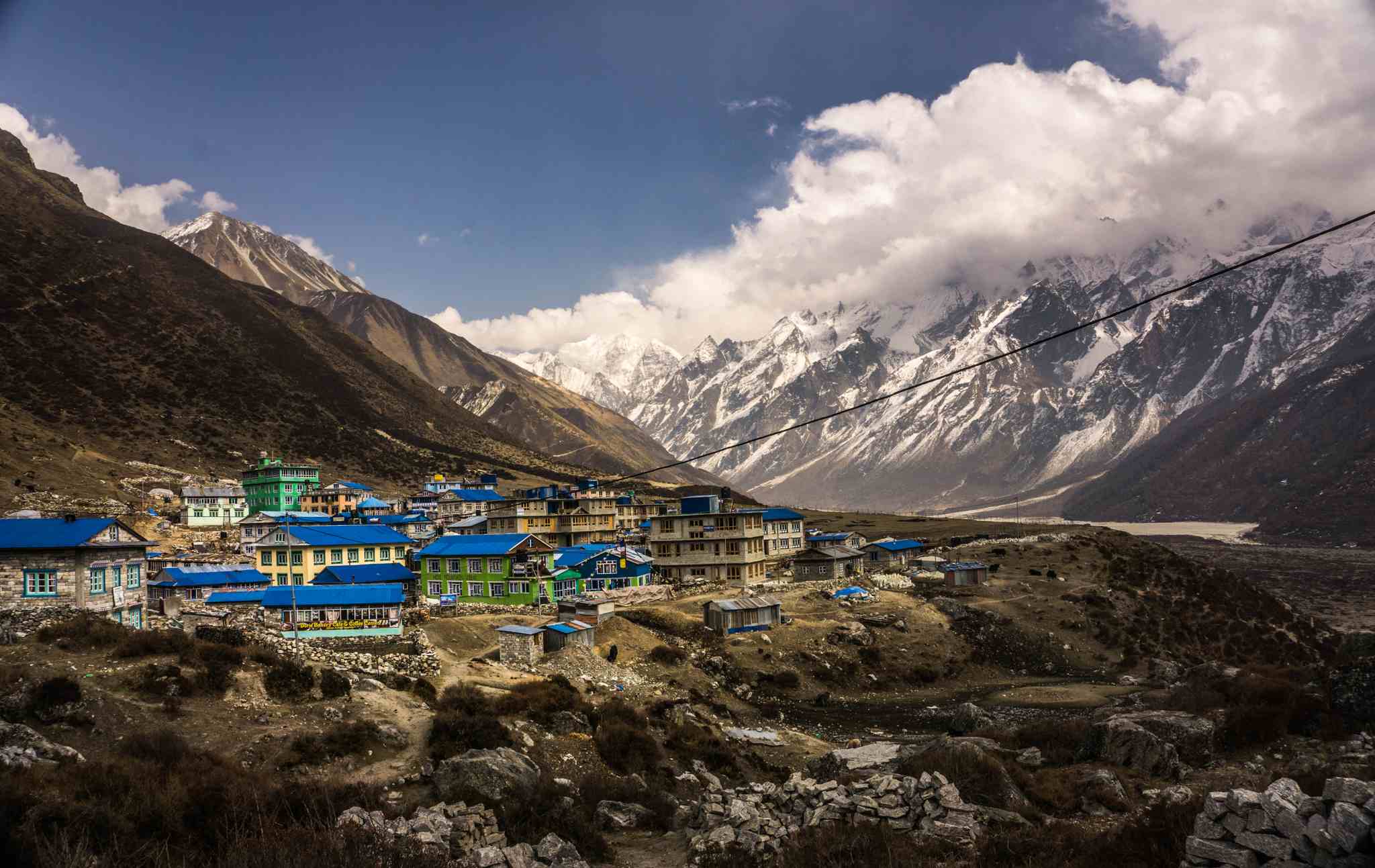
The Langtang Valley Trek is rated as a moderate-difficulty trek. It sits in a comfortable middle ground: harder than short, low-altitude walks like Ghorepani Poon Hill, but considerably less demanding than the Annapurna Circuit or Everest Base Camp, both of which involve more time at extreme altitude and, in Annapurna’s case, a high mountain pass. You don’t need mountaineering experience, technical climbing skills, or elite-level fitness. What you do need is a reasonable baseline of cardiovascular fitness, the discipline to acclimatize properly, and realistic expectations about what 5 to 7 hours of daily walking at altitude actually feels like.
Because it starts just a few hours’ drive from Kathmandu and can be completed in as little as 7 to 8 days, Langtang has become one of the most popular “introduction to high-altitude trekking” routes in Nepal. It’s often recommended to first-timers, busy professionals with limited vacation time, and families with older kids or teenagers. That popularity, though, has created a bit of a trap: because the trek is marketed as beginner-friendly, some trekkers underestimate it, rush the itinerary, and end up dealing with altitude sickness that could have been avoided with one extra acclimatization day.
Let’s get into the specifics.
The Altitude Profile: The Real Source of Difficulty
Ask anyone who has done the Langtang Valley Trek what the hardest part was, and altitude comes up more often than the terrain itself. The trek isn’t technically steep in the way that, say, a scramble up loose scree would be. What makes it hard is the speed at which you gain elevation.
The trek begins in Syabrubesi, roughly 1,550 meters above sea level, reached after a long drive north from Kathmandu. From there, the trail climbs steadily through forest and riverside paths to Lama Hotel, then pushes on to Langtang Village at around 3,430 meters. That’s a significant elevation gain compressed into just two to three days of walking. Depending on your itinerary, you’ll then continue up to Kyanjin Gompa, sitting at roughly 3,870 meters, which serves as your base for exploring the upper valley.
From Kyanjin Gompa, many trekkers add an optional side trip to Tserko Ri, a viewpoint that tops out close to 4,984 meters. This isn’t a required part of the standard itinerary, but it’s the highlight for a lot of people, offering sweeping views of Langtang Lirung and the surrounding peaks. It’s also, unsurprisingly, the most physically demanding single day of the trek — a steep, sustained climb at an altitude where the air is noticeably thinner.
Here’s the thing about altitude that catches inexperienced trekkers off guard: it’s not a linear difficulty curve. The walking itself, in terms of raw distance and incline, might feel comparable to a strenuous day hike at sea level. But above 3,000 meters, your body is working with less available oxygen, and the effects compound the higher you go. Shortness of breath on modest inclines, a slower resting heart rate recovery, disrupted sleep, and reduced appetite are all normal responses to altitude, even in fit, healthy people. Acute Mountain Sickness (AMS) is a real risk on this route precisely because the ascent from Syabrubesi to Langtang Village happens so quickly.
The good news is that AMS is largely preventable, not through fitness, but through pacing. This is the single biggest factor separating trekkers who have a great time from those who cut their trip short.
Daily Walking Hours and Terrain
On a typical Langtang itinerary, you’ll walk somewhere between 5 and 7 hours per day, broken up by lunch stops, photo breaks, and the occasional tea house pause. This is a manageable amount for anyone with decent day-hiking experience, but it does add up over a week, and the terrain isn’t uniformly gentle.
The stretch from Lama Hotel to Langtang Village is widely considered the most demanding single section of the trek. It gains close to 960 meters over roughly 12 kilometers, passing through dense rhododendron and oak forest via stone staircases and rooted, sometimes muddy trail. Expect your legs and lungs to be working here in a way they haven’t been on the earlier, gentler sections.
Above Langtang Village, the landscape changes character entirely. The forest thins out and eventually disappears, replaced by open alpine terrain — grassland, scree slopes, and exposed ridgelines with much less shelter from wind. This section is less punishing in terms of gradient but introduces a different challenge: greater wind exposure and the psychological effect of being visibly, obviously high up in the mountains, with thinner air to show for it.
The final approach into Kyanjin Gompa tends to be gentler by comparison, which is a welcome break after the climb out of Langtang Village. It’s worth noting that trail infrastructure throughout the route has been substantially rebuilt since the devastating 2015 earthquake, which caused significant damage to the Langtang region, including the near-total destruction of Langtang Village itself. Tea houses now operate reliably along the main route from Syabrubesi to Kyanjin Gompa, and the trail is well-marked and consistently traveled, even if some sections between Lama Hotel and Langtang Village remain naturally rocky and steep.
Importantly, none of this requires technical climbing gear. There’s no use of ropes, crampons, or ice axes on the standard route. It’s walking, not mountaineering — but walking that becomes progressively harder the higher you go, both because of the altitude and because trail surfaces shift from packed earth and stone to looser, more exposed ground.
Comparing Langtang to Other Popular Treks
Difficulty is relative, and one of the most useful ways to calibrate your expectations is to see how Langtang stacks up against Nepal’s other headline treks.
Ghorepani Poon Hill is generally considered easier than Langtang. It tops out at a lower altitude (around 3,210 meters at Poon Hill itself), takes less time, and doesn’t involve the same sustained multi-day elevation gain. If you found Poon Hill comfortable, Langtang will feel like a step up but not an overwhelming one.
Annapurna Base Camp is roughly comparable to Langtang in overall difficulty. Both involve daily walking in the 5 to 7 hour range, moderate elevation gains, and a maximum altitude in the high 3,000-to-low-4,000-meter range (excluding optional side trips). If you’re deciding between the two, the choice often comes down to scenery preference and trip length rather than difficulty.
Annapurna Circuit, particularly the crossing of Thorong La Pass at 5,416 meters, is meaningfully harder than Langtang. The pass day alone involves a longer, higher, colder push than anything on the standard Langtang itinerary, and the trek as a whole takes longer, exposing you to more cumulative fatigue and altitude stress.
Everest Base Camp and the Everest Three Passes Trek sit above Langtang in difficulty as well, both because of the higher maximum altitude (EBC itself sits above 5,300 meters) and the longer overall duration, which means more days of accumulated physical strain and more opportunities for weather or health issues to disrupt your plans. The Three Passes route, which adds three high mountain passes to the standard Everest itinerary, is considered one of the hardest teahouse treks in Nepal and is not really comparable to Langtang at all.
So where does that leave Langtang? Right in the middle: a genuine high-altitude Himalayan trek with real physical demands, but one that’s achievable within a single week or two, without the extended commitment or extreme elevation of Nepal’s toughest routes. It’s frequently recommended as a good starting point for trekkers who want to test how their body handles altitude before committing to something longer and higher.
Acclimatization: Where Most Mistakes Happen
If there’s one section of this guide worth reading twice, it’s this one. The physical walking on Langtang is rarely what defeats people. Poor acclimatization is.
Because Langtang is marketed as a shorter, more accessible trek, some travelers — and, worth noting, even some budget itineraries — try to compress the schedule too aggressively, pushing from Syabrubesi to Kyanjin Gompa in three days flat with minimal rest. Some trekkers manage this without issue. Others end up with pounding headaches, nausea, and exhaustion that force them to descend early, missing out on the upper valley entirely.
The generally recommended approach is to build in at least one full rest and acclimatization day in Langtang Village before continuing up to Kyanjin Gompa, and ideally two nights at Kyanjin Gompa itself before attempting the climb to Tserko Ri. This isn’t just conservative caution for its own sake — it reflects how your body actually adapts to reduced oxygen availability, by giving your system time to increase red blood cell production and adjust breathing patterns at each elevation band before pushing higher.
Know the warning signs. A persistent headache that doesn’t respond to standard pain relief, nausea, dizziness, loss of appetite, and unusual fatigue are all early indicators of Acute Mountain Sickness. Mild symptoms are common and often resolve with rest and hydration. But if two or more symptoms are present and worsening, the correct response is to stop ascending, and if symptoms don’t improve, to descend. Pushing through worsening AMS symptoms is how altitude sickness escalates into the more serious and potentially life-threatening conditions of HAPE (High Altitude Pulmonary Edema) or HACE (High Altitude Cerebral Edema), both of which require immediate descent and, in severe cases, emergency evacuation.
The practical takeaway: build slack into your itinerary. If a trekking agency offers you an aggressive 6-day version of the route to save money, ask what happens if you develop symptoms at Langtang Village — do you have a built-in buffer day, or does that throw off the entire schedule?
Weather and Seasonal Difficulty
Trail difficulty on Langtang isn’t fixed — it shifts noticeably with the seasons, and choosing the right window can make a meaningful difference to how hard the trek feels.
Spring (March to May) and autumn (October to November) are considered the optimal trekking seasons. Both offer relatively stable weather, clearer mountain views, and firmer, more predictable trail surfaces. Spring adds the bonus of rhododendron forests in bloom along the lower sections of the trail, which is a nice reward for the climb out of Lama Hotel.
Winter (December to February) brings snow, particularly at higher elevations around Kyanjin Gompa and on the Tserko Ri side trip. Some tea houses may operate on reduced capacity, and cold-weather gear becomes essential rather than optional. The trek is still doable in winter, and some trekkers specifically seek out the quieter trails and snow-dusted scenery, but the physical difficulty and the cold-injury risk both increase.
Monsoon season (June to September) is the least recommended window. Rain makes trail surfaces muddy and slippery, particularly on the steeper forested sections between Lama Hotel and Langtang Village, cloud cover frequently obscures mountain views, and leeches become a persistent nuisance on the lower trail. Landslide risk also increases in this region during heavy monsoon rains, which can occasionally disrupt the road journey to and from Syabrubesi.
If difficulty management is a priority for you, timing your trek for spring or autumn removes one major variable from the equation and makes the “moderate” rating feel considerably more moderate.
Permits, Guides, and Practical Logistics
A quick but important note on regulations, since it directly affects how you’ll experience the trek’s difficulty: as of February 2025, foreign trekkers are required to hire a licensed guide to trek in the Langtang region — independent solo trekking without a guide is no longer permitted. This is worth building into both your planning and your budget, as it affects cost, pacing, and how much route-finding and logistics you’ll need to handle yourself (which, with a guide, is essentially none).
You’ll need two permits: the Langtang National Park Entry Permit and a TIMS (Trekkers’ Information Management System) card. Combined, these typically run somewhere in the range of USD 30 to 50 for foreign nationals, though exact fees are worth confirming closer to your travel dates since rates are periodically adjusted. Permits can be arranged through a registered trekking agency in Kathmandu, and you’ll need your passport, a couple of passport photos, and a valid Nepal tourist visa to process them. Checkpoints along the route, including at Dhunche and points beyond Lama Hotel, verify these permits, so keep them accessible rather than buried in your pack.
On cost more broadly, budgets vary widely depending on trekking style. An independent-style trek with a guide and basic teahouse accommodation might run somewhere in the region of $700 to $900 for a full 8 to 11 day trip, while a fully guided and ported standard package tends to land between $1,200 and $1,500. Private, upgraded itineraries with jeep transport push higher still. None of this affects the physical difficulty of the trek, but it’s worth factoring in since guide and porter support can meaningfully reduce the physical burden — a porter carrying your main bag while you walk with a light daypack is a significant difference-maker on the tougher uphill sections.
Who This Trek Is Realistically Suited For
Pulling all of this together, here’s a grounded picture of who tends to do well on the Langtang Valley Trek:
People with a basic to good baseline of fitness, comfortable walking 5 to 7 hours on varied terrain over consecutive days. You don’t need to be a marathon runner, but if a few hours of hill walking or stair climbing leaves you completely wrecked, some pre-trip fitness preparation will make a real difference to how much you enjoy the trek rather than endure it.
First-time high-altitude trekkers looking for a realistic test case before attempting something longer or higher, like Everest Base Camp or Annapurna Circuit. Langtang gives you a genuine altitude experience — thin air, cold nights, the particular fatigue of high-elevation walking — without the extended time commitment of Nepal’s bigger routes.
Travelers with limited vacation time. Because it’s accessible via a single day’s drive from Kathmandu rather than a domestic flight, and because the core route can be completed in about a week, Langtang fits into schedules that wouldn’t accommodate a 2 to 3 week Everest or Annapurna itinerary.
Families with older children or teenagers who have some hiking experience. The trail doesn’t require technical skill, and the pacing can generally be adjusted to accommodate a slower group, provided the itinerary builds in enough time for that flexibility.
Who might want to think twice, or at minimum prepare more deliberately: trekkers with no hiking or hill-walking background at all, anyone with pre-existing cardiovascular or respiratory conditions (who should consult a doctor beforehand regardless of trek choice), and anyone unwilling to build acclimatization days into their schedule. The trek’s moderate rating assumes sensible pacing — strip that out, and the difficulty climbs considerably.
Preparing Your Body: A Realistic Training Approach
You don’t need a specialized mountaineering training program to get ready for Langtang, but showing up with zero preparation is a common way to turn a moderate trek into a miserable one. The goal isn’t peak athletic performance — it’s building enough cardiovascular endurance and leg strength that 6 hours of walking on day four doesn’t feel like punishment.
In the two to three months before departure, regular cardio three to four times a week goes a long way: brisk walking, hiking, jogging, cycling, or swimming all work, as long as you’re consistently elevating your heart rate for 30 to 60 minutes. If you have access to hills or stairs, use them — the specific muscle groups involved in sustained uphill and downhill walking (quads, glutes, calves, and stabilizing muscles around the knees and ankles) respond best to training that mimics the actual movement pattern you’ll be doing on the trail.
Downhill walking deserves specific attention, since it’s often overlooked in training but causes a disproportionate amount of trail soreness. The repetitive impact of descending, especially on the steep sections back down from Kyanjin Gompa or Tserko Ri, works your quads eccentrically in a way flat walking doesn’t. If you can, include some downhill hiking or stair descents in your training to prepare for this.
It’s also worth doing at least one or two long training hikes — ideally 4 to 6 hours, with a loaded daypack similar to what you’ll carry on the trek — in the month before you leave. This does two things: it builds trek-specific stamina, and it lets you test your gear (boots especially) before you’re relying on it in the Himalayas with no easy way to swap out ill-fitting footwear.
Finally, don’t underestimate the value of simply spending time outdoors and getting used to multi-day physical exertion. Fitness tested in a gym doesn’t always translate directly to trail fitness, where fatigue accumulates differently over consecutive days rather than resetting after 24 hours of rest.
Frequently Asked Questions
Can a complete beginner do the Langtang Valley Trek?
Yes, with some caveats. Complete beginners with no hiking background can and do complete this trek, but they should build in extra preparation time, choose a conservative itinerary with plenty of acclimatization days, and go in with realistic expectations about how tired they’ll feel on the harder days. A guide can also help pace things sensibly for less experienced trekkers.
Do I need prior high-altitude experience?
No. Langtang is frequently recommended as an entry point to Himalayan altitude precisely because it doesn’t require prior high-altitude experience. It does, however, reward respect for altitude — meaning a willingness to acclimatize properly rather than rush.
What’s the hardest single day of the trek?
Most trekkers point to either the Lama Hotel to Langtang Village stage, because of the sustained elevation gain over rocky, forested terrain, or the optional day hike to Tserko Ri, because of the combination of steep gradient and high altitude thinning the air significantly.
Is a guide mandatory?
As of February 2025, yes — foreign trekkers are required to hire a licensed guide for the Langtang region. Independent solo trekking without one is no longer permitted.
How does Langtang compare to a long-distance hike back home, like a section of a well-known trail in the US or Europe?
In terms of pure daily mileage and elevation gain, many multi-day hikes at lower altitudes involve comparable or even greater physical exertion per day. What sets Langtang apart isn’t the walking itself so much as the altitude — the thinner air at 3,000 to 4,000-plus meters makes the same physical effort feel harder, and introduces the altitude-sickness risk that simply doesn’t exist on most lower-elevation trails.
What if I get altitude sickness partway through?
Mild symptoms — headache, slight nausea, reduced appetite — are common and often improve with rest, hydration, and a day without further ascent. If symptoms are moderate to severe, or worsening despite rest, the correct response is to descend rather than push on. This is a key reason to trek with a guide, who can help assess symptoms and make that call before things become serious.
Final Thoughts
The Langtang Valley Trek earns its “moderate difficulty” label honestly. It’s not a walk in the park — you’ll gain serious altitude, spend several days at elevations where your body has to work harder for less oxygen, and cover genuinely challenging terrain on at least one or two days, particularly the push from Lama Hotel to Langtang Village. But it’s also not a trek that demands technical skill, extreme fitness, or weeks of your life. With sensible pacing, a couple of built-in acclimatization days, decent trip-appropriate fitness, and the right season, it’s a trek that rewards preparation without punishing anyone who isn’t already a seasoned mountaineer.
If you’re weighing Langtang against Nepal’s other classic routes, think of it less as “the easy option” and more as “the honest introduction” — a trek that gives you a real taste of Himalayan altitude and scenery, on a timeline and difficulty level that most reasonably fit trekkers can handle with proper preparation.