Incredible circuit around Annapurna with one of the best guide that i have met. If you want to have an incredible experience hoy should go with him.
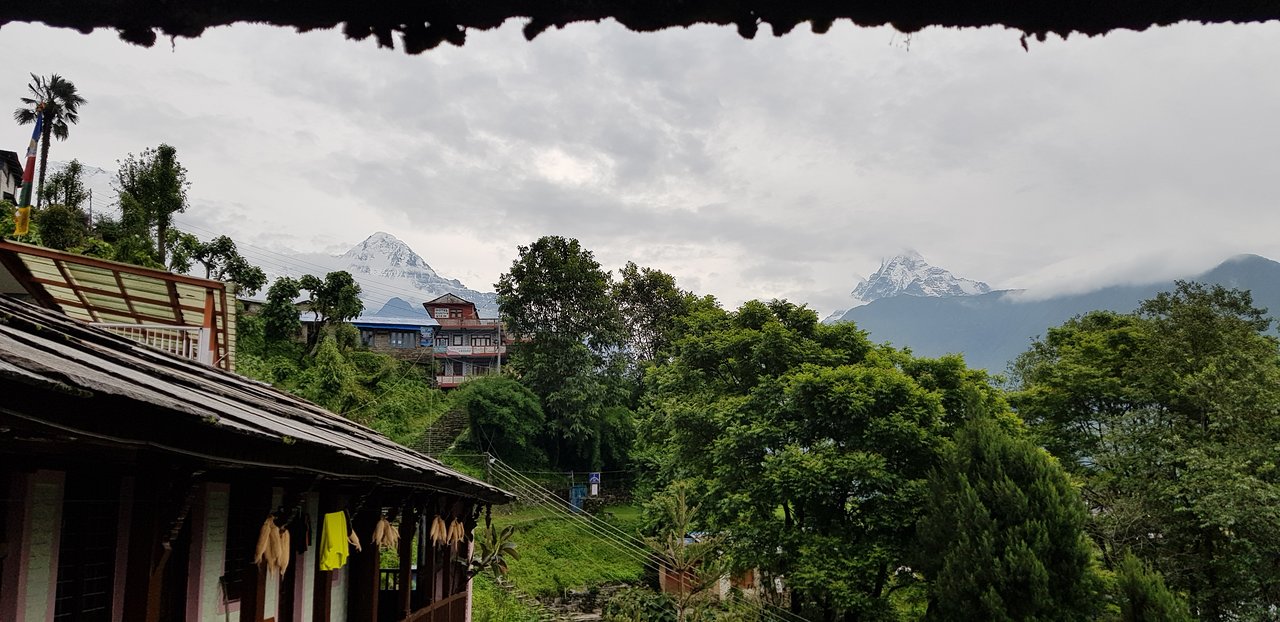

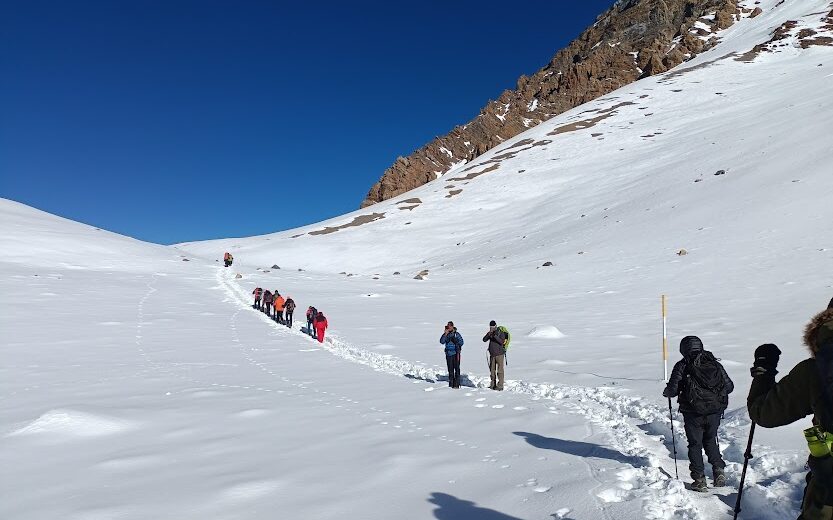
Annapurna Circuit Trek is listed as the world’s Top Ten Adventure destination by several leading Travel Guide Books and Magazines, truly a great walk with an exciting time as our route leads from warm paddy fields to cooler alpine hills towards the arctic zone of ice and glaciers.
Annapurna Circuit Trek is one of the most picturesque and scenic walks around the Himalayan region in the comfort of the nice cozy lodge on route trekking with incredible views and a panorama of peaks.
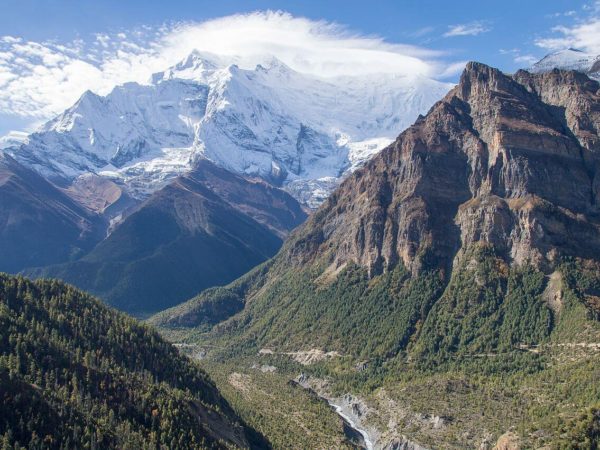
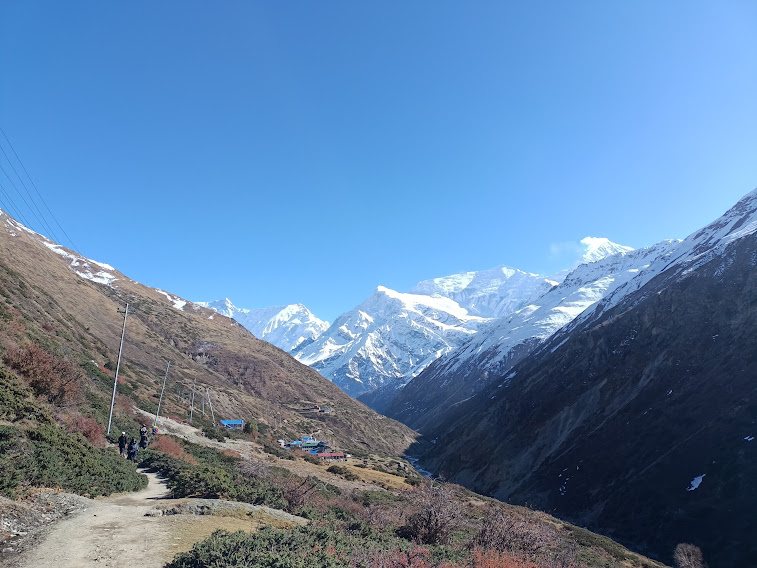
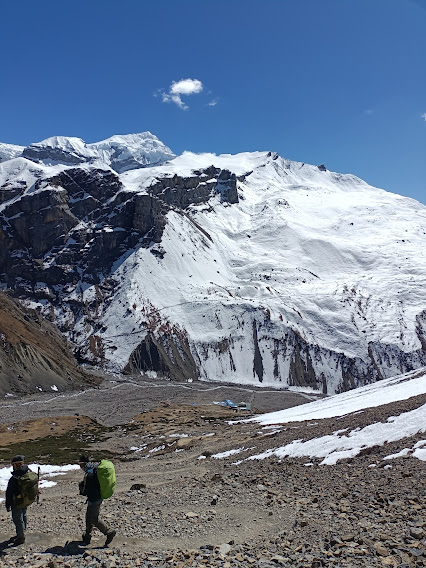
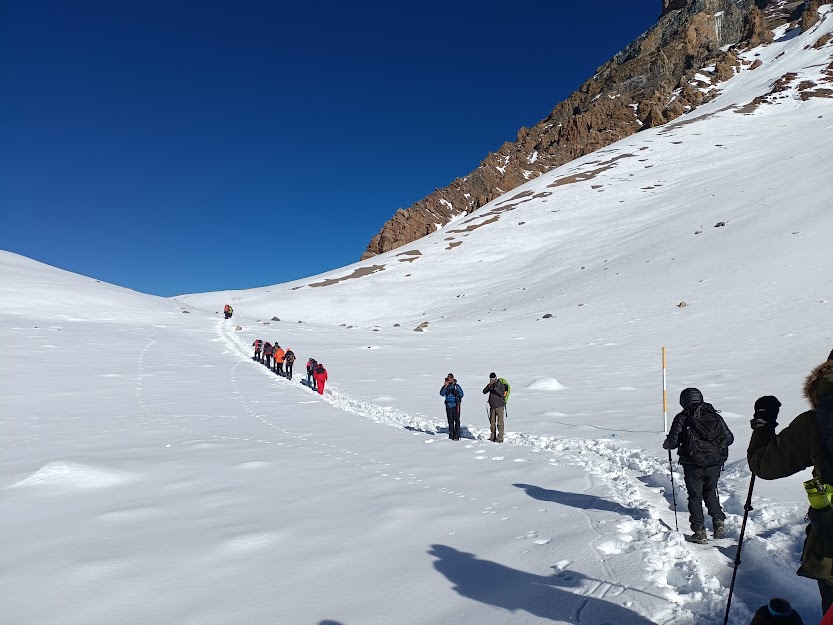
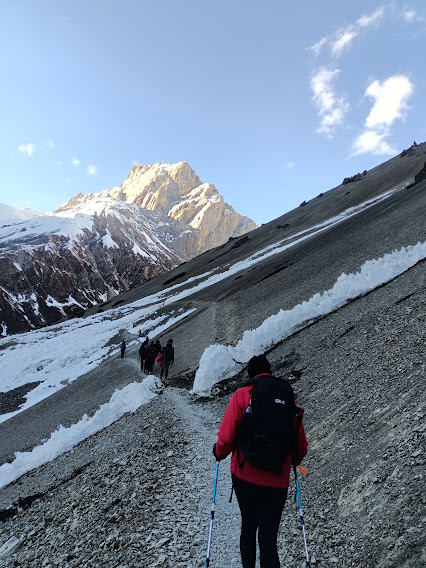
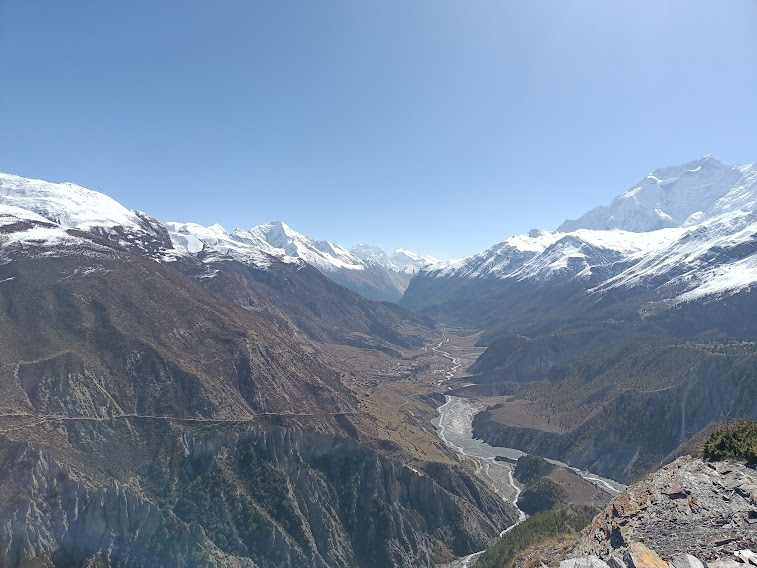
On walks around Annapurna Circuit & Thorang-La Pass, daily great views of both sides of Annapurna’s massive peaks, with Chulu’s, Mt. Manaslu, and Lamjung Himal with Mt. Dhaulagiri range crossing high and scenic Thorang-La Pass.
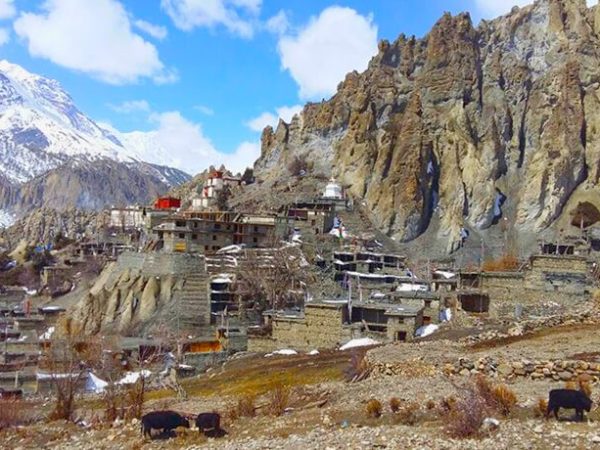
Besides mountain views and fantastic landscapes, the culture and customs of the villagers are equally interesting, on reaching the highest Manang valley with impressive Buddhist religion and traditional way of life similar to Tibetans.
Starting our marvelous journey Annapurna Circuit & Thorang-La pass with an exciting scenic drive to reach Lamjung areas around Nepal Mid West Himalaya, from here following Marsyangdi River upstream right to its glacial source near Manang village.
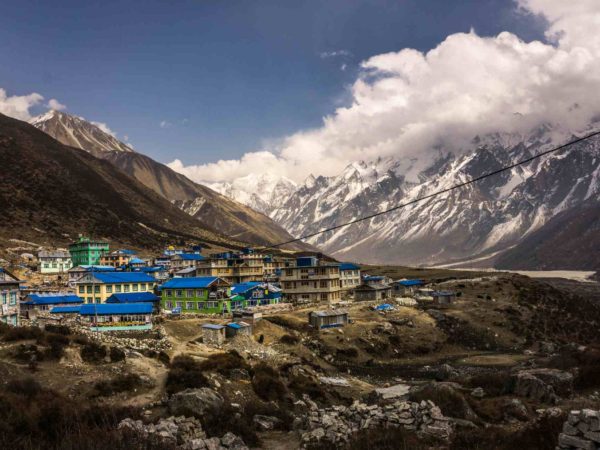
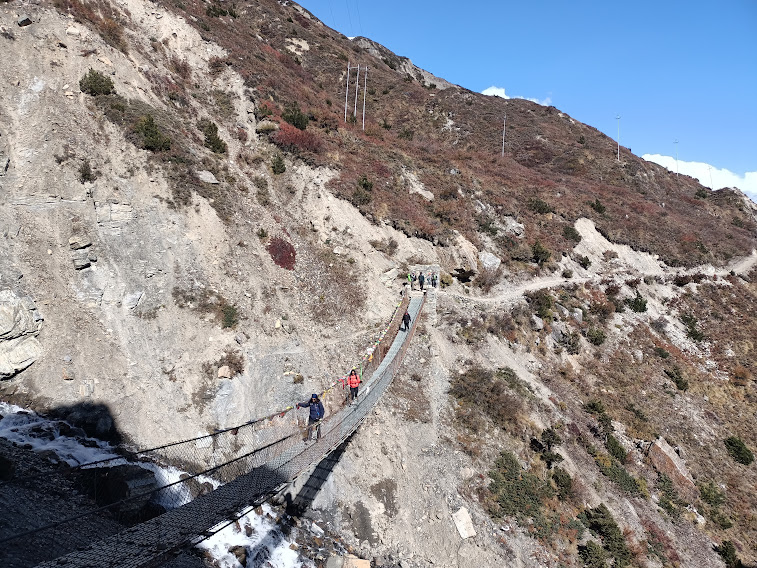
Walk leads into a serene cool forest on leaving warm sub-tropical low areas towards alpine hills with views of mountains and walking past lovely villages of Jagat, Tal, Dharapani, and Chame a headquarter town of Manang areas.
The journey continues reaching windswept and dry country into Manang Valley enclosed with peaks of Annapurna and Chulu peaks, with a rest day for acclimatization at Manang to explore its interesting villages and monasteries, then heading to cross high and scenic Thorang-La Pass.
On crossing the highest point of the adventure leading to Lower Mustang areas at holy Muktinath and then at Kaligandaki River valley to Jomsom a major town of Mustang district and then heading past charming villages of Marpha, Tukuche, Ghasa to reach warmer areas at Tatopani village.
After a refreshing time in Tatopani with Hot Natural Springs to enjoy, then climb towards cooler areas at Ghorepani and Poon Hill for fantastic sunrise over the chain of Himalayan peaks with the Dhaulagiri range, from here walking into lovely forested areas of rhododendron to reach the end of the trek at Hille.
From Hille farm village few hour’s drive takes you to the famous touristic and beautiful Pokhara by the serene Phewa Lake where our marvelous adventure Annapurna Circuit & Thorang-La concludes.
The best time to trek the Annapurna Circuit is spring (March–May) and autumn (September–November). These seasons offer stable weather, clear mountain views, and comfortable trekking conditions.
Winter is cold and challenging at high passes, while the monsoon (June–August) is generally not recommended due to rain and landslides.
The Annapurna Circuit Trek is generally rated as a moderate to challenging trek, mainly because of its long duration, high altitude, and varied terrain. Trekkers usually walk around 6–8 hours per day, covering both steep ascents and long descents on stone steps and mountain trails. The main challenge is crossing the Thorong La Pass (5,416m), where the risk of altitude sickness increases if proper acclimatization is not followed. Weather conditions can also make the trek tougher, especially in winter or during unexpected rain or snow. Overall, it is suitable for trekkers with a good level of fitness and some previous hiking experience, but beginners can also complete it with proper preparation, pacing, and rest days.
The Annapurna Circuit Trek offers a wide range of food, drinks, and accommodation options along the trail, from simple local meals to basic but comfortable mountain lodges.
Teahouses serve both Nepali and international dishes. Breakfast options include eggs, bread, pancakes, porridge, Tibetan bread with jam or honey, along with tea and coffee. For lunch and dinner, the most popular choice is Dal Bhat (rice, lentils, and vegetables), which is nutritious and refillable in many places. You will also find items like momo, chowmein, thukpa, pasta, and pizza, depending on the village.
Hot drinks such as tea and coffee are widely available throughout the trek. Bottled soft drinks are sold but are expensive at higher altitudes. Alcohol is also available but not recommended due to dehydration risks. The safest and best option is boiled or filtered water, which you can refill along the route.
Accommodation is mainly in teahouses, lodges, and homestays. Rooms are usually simple with twin beds and shared bathrooms, though some larger villages offer private rooms and hot showers for an extra cost.
Expect basic facilities, including shared bathrooms, limited hot showers, and charging facilities in common areas. Wi-Fi is available in some places but can be unreliable, so mobile data (NTC or Ncell) is often more useful.
For the Annapurna Circuit Trek, you mainly need the ACAP (Annapurna Conservation Area Permit), which is mandatory for all trekkers and required to enter and travel through the Annapurna region. It supports conservation and is checked at various points on the trail.
The TIMS card (Trekkers’ Information Management System) may be required in some cases, but for many recent trekking arrangements it is optional or not strictly needed.
The Annapurna Circuit Trek is one of the best cultural journeys in Nepal because it takes you through very different ethnic communities and lifestyles. In the lower regions, you will walk through Gurung and Magar villages where people mainly depend on farming and animal husbandry. The lifestyle is simple, and you can experience warm hospitality in traditional tea houses. As you move higher, especially in the Manang region, the culture gradually changes into Tibetan-influenced Buddhism. Here you will see monasteries, prayer wheels, chortens, prayer flags, and stone-built houses, showing a strong Himalayan Buddhist heritage. In the Mustang side around Muktinath, both Hindu and Buddhist pilgrims come to worship, making it a very spiritual and culturally rich place. Overall, the trek is like a cultural transition from the green hills of Nepal to the high Himalayan Tibetan-style villages.
The Annapurna Circuit Trek is possible for beginners, but it depends on preparation and mindset. The trail is well-developed with tea houses, food options, and clear paths, so no technical mountaineering skills are required. This makes it more accessible compared to many other high-altitude treks in Nepal. However, the main challenge is the long trekking duration and high altitude, especially crossing Thorong La Pass at 5,416 meters, which can cause altitude sickness if you are not careful. Beginners should take a slow pace, avoid rushing the ascent, and plan at least 12 to 18 days to allow proper acclimatization. Basic fitness training like walking, jogging, or hiking before the trip will be very helpful. With good planning and patience, beginners can successfully complete this trek, but it should be treated as a moderate to challenging adventure, not an easy walk.
Travel insurance is highly recommended for the Annapurna Circuit Trek. Your policy should cover high-altitude trekking up to 5,416 meters (Thorong La Pass), emergency medical treatment, helicopter evacuation, trip cancellation, and lost or delayed baggage. Since weather and altitude-related issues can occur in the Himalayas, comprehensive insurance provides peace of mind throughout your adventure.
Altitude sickness is a common concern on the Annapurna Circuit due to the trek’s high elevation. Symptoms may include headache, nausea, dizziness, fatigue, and shortness of breath. Proper acclimatization, staying hydrated, ascending gradually, and taking rest days can significantly reduce the risk. If symptoms worsen, immediate descent is the safest solution. Most trekkers complete the circuit successfully by following a well-planned itinerary and listening to their bodies.
The Annapurna Circuit Trek is one of Nepal’s most rewarding trekking adventures, offering an incredible variety of landscapes, cultures, and mountain scenery.
Key Reasons to Choose the Annapurna Circuit Trek
Combining breathtaking mountain scenery, rich cultural experiences, and diverse terrain, the Annapurna Circuit remains one of the most iconic trekking routes in the Himalayas.
Incredible circuit around Annapurna with one of the best guide that i have met. If you want to have an incredible experience hoy should go with him.